

215. Ben Goldfarb with Brooke Jarvis - Life is a Highway: Protecting Wildlife through Road Ecology
Town Hall Seattle Science Series
Release Date: 10/02/2023
 270. Nature, Art, and Literature: Pacific Northwest Book Launch & Season Preview
Town Hall Seattle Science Series
Join the team behind Skipstone (an imprint of the nonprofit, independent Seattle publishing house, Mountaineers Books) for an evening of nature, literature, and advocacy to celebrate the launch of Cascade of Life: An Artist’s Seasonal Guide to the Wild Northwest by author and illustrator Emily Poole, joined by Mountaineers Books Editor-in-Chief Kate Rogers. More than just a book launch, this evening is an exclusive preview of the art and natural history books arriving from Mountaineers Books/Skipstone in the upcoming Fall season. From Red-winged Blackbird to Silver-haired Bat,...
info_outline 269. David R. Montgomery: How to Heal Our Soil
Town Hall Seattle Science Series
A century of conventional farming has left our planet with sick soil, accelerating the interlinked crises of food security, biodiversity loss, water pollution, and climate change. In his new book, ReGen: A New Future for Farming, Food, and Health, David R. Montgomery lays out a practical and productive vision for recovering soil health and safeguarding the future of food. The answer: soil-building regenerative farming. In exploring this much-needed turning point for agriculture, Montgomery marshals more than a decade of research, interviewing innovative farmers and seeing firsthand how...
info_outline 268. Perrin Roosevelt Ireland: Poking the Squid
Town Hall Seattle Science Series
In the illustrated guide, Poking the Squid, Perrin Roosevelt Ireland illustrates the splendid diversity of nature’s eroticism. Chock full of delightful watercolor comics featuring pregnant seahorse dads, spider oral sex, and the four-headed echidna penis, Ireland takes us on a wild biodiversity ride through queerness, infidelity, consent, divorce, sex change, and even sexual cannibalism in the animal world. Ireland interviews researchers probing the leading edge of animal reproductive biology and, with the help of her cats Ursula and Pudge, brings readers along as she learns the...
info_outline 267. Lynda Mapes: America’s Arctic: Too Precious to Lose
Town Hall Seattle Science Series
The northernmost stretches of Alaska host an environmental wonder that very few people will connect with in their lives — millions of acres of largely undisturbed public land along the Arctic Circle. This region contains pristine tundra landscapes, unrestricted rivers shaped only by nature, and unique wildlife like polar bears, the only caribou herds in the United States, and more aquatic birds than can be found in any other Arctic wetland. And while the features and roles of these lands may be foreign to many even within the United States, science writer Lynda Mapes is committed to the...
info_outline 266. David Epstein with Katy Sewall: Inside the Box: How Constraints Make Us Better
Town Hall Seattle Science Series
Limits are the key to stimulating creativity, innovation, and collaboration. In a world that gives us seemingly infinite choices and prizes freedom above all else, we have an unprecedented number of options regarding what to do, who to be, and how to spend our time. All that choice is wonderful, but it is also overwhelming. The irony is that total freedom can be paralyzing, and unlimited resources don’t necessarily lead to the biggest breakthroughs. In fact, overvaluing complete freedom can be disastrous for everything from starting a company to harnessing creativity to finding personal...
info_outline 265. Psychedelic Salon: Psychedelics & Grief With Dr. Sunil Aggarwal, Laura Sullivan Cassidy, and April Pride
Town Hall Seattle Science Series
Grief is one of the most universal yet isolating experiences we endure—and psychedelics may offer a path through it. This Salon explores how substances like psilocybin, MDMA, and 5-MeO-DMT are being used to support those navigating loss, whether from death, identity shifts, or life transitions. This session sheds light on how altered states can help us reconnect to love, soften the sharp edges of sorrow, and reorient to a life forever changed. Attendees will gain insight into the science and integration practices that support emotional processing and meaning-making in the context of grief....
info_outline 264. Steve Brusatte with David B. Williams: A New History of Birds: From Their Dinosaur Origins to the Present
Town Hall Seattle Science Series
Try to imagine a world without birds. It’s quite a challenge, given that we share the planet with tens of billions of birds spanning an astonishing 14,000 species. Birds find homes nearly everywhere that people do – and many places we do not – and their prowess and plumage have captivated human imagination throughout the ages. But impressive aerial feats and collective choirs of song aside, part of our fascination with birds is rooted in the awe of something so delicate and strange. How did such seemingly fragile creatures made of hollow bones and downy feathers break the mold of...
info_outline 263. Psychedelic Salon: Psychedelics & Disordered Eating With Dr. Amanda Downey and April Pride
Town Hall Seattle Science Series
A conversation about the emerging potential of psychedelics, particularly psilocybin, in addressing eating disorders—a psychiatric area marked by persistent treatment challenges. This Salon dives into groundbreaking research showing how psychedelics disrupt entrenched thought patterns, ease cognitive rigidity, and foster self-compassion and emotional reconnection. April Pride and invited experts will discuss the limitations of current treatments and how psychedelic therapies could offer new hope. Attendees will leave with a deeper understanding of how psychedelic-assisted therapy might...
info_outline 262. Suzanne Simard with Lynda Mapes: When the Forest Breathes
Town Hall Seattle Science Series
Forest ecologist Suzanne Simard has long been fascinated by the sharing of natural knowledge. From the interconnected root systems she studied in her book Finding the Mother Tree to her ongoing work as an educator, Simard has learned to see the importance of cooperative efforts to share resources and knowledge. Joined in conversation by Seattle-based nature journalist Lynda Mapes, Simard expands these connections into a considerate exploration of the elaborate cycles of forest ecosystems, the challenges they currently face, and the intergenerational value they can provide through...
info_outline 261. Cate Osborn: Wildly Unprepared
Town Hall Seattle Science Series
Comedian, historian, and bestselling author Cate Osborn brings a special program derived from her live touring show, Wildly Unprepared. This evening features a curated portion of the performance, exploring the strange and surprising history of magic, spectacle, and belief, along with storytelling and conversation about curiosity, culture, and the stories we inherit. While this program draws from the larger theatrical show, it is designed as a standalone event created especially for Town Hall audiences. The show will be followed by a Q&A with Cate. About the Book Just shy of her thirtieth...
info_outlineDid you know that there are 40 million miles of roadways on earth?
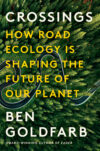
While roads are practically invisible to humans, wild animals experience them entirely differently. Conservation journalist Ben Goldfarb has explored the environmental effects of this ubiquitous part of the modern world.
In his book, Crossings, Goldfarb explains how creatures from antelope to salmon are losing their ability to migrate in search of food and mates; invasive plants hitch rides in tire treads; road salt contaminates lakes and rivers; and the very noise of traffic chases songbirds from their habitat. These effects on nature are everywhere, all because of human activity.
Yet there is human activity that is working to combat these effects as well. Goldfarb describes conservation work such as highway wildlife bridges, similar to the I-90 wildlife corridor in Washington state. He explains how tunnels for toads and deconstructing old logging roads can make a difference. These projects and other research in road ecology are working toward lessening the hazards of roadways. While they may take up millions of miles of the planet, roads can leave a smaller impact in the future.
Ben Goldfarb is an award-winning environmental journalist who covers wildlife conservation, marine science, and public lands management, as well as an accomplished fiction writer. His work has been featured in Science, Mother Jones, The Guardian, High Country News, VICE, Audubon Magazine, Modern Farmer, Orion, World Wildlife Magazine, Scientific American, Yale Environment 360, and many other publications. He is the author of Eager: The Surprising, Secret Life of Beavers and Why They Matter.
Brooke Jarvis is an independent journalist based in Seattle. She’s a contributing writer to The New York Times Magazine and a winner of the Livingston Award and the Whiting Award.
Third Place Books