

Noah Millman: from finance to the culture industry
Razib Khan's Unsupervised Learning
Release Date: 08/15/2025
 Shadi Hamid: American power and the post-woke age
Razib Khan's Unsupervised Learning
On this episode of Unsupervised Learning Razib talks again with Washington Post and repeat guest Shadi Hamid (listen to ). A native Pennsylvanian of Egyptian ethnic background and Islamic faith, Hamid completed his Ph.D. in politics at Oxford University. He is co-host of the and with , and now the author of his own and a recent book, . Hamid is also the author of . , and . Before moving the discussion to , Razib asks Hamid about his current positioning on the American political...
info_outline Vishal Ganesan and Anang Mittal: American Hinduism out of Indian Hinduism
Razib Khan's Unsupervised Learning
On this episode, Razib talks to and , two Indian-American Hindus who have been thinking about the role of their faith in the present, and past, of the American social landscape. Ganesan is a California-based attorney and writer who focuses on the history, identity, and representation of the Hindu diaspora in the United States. He is best known for his project and his writing on the “Frontier Dharma” platform, which attempts to conceptualize what an American, as opposed to Indian, “Hinduism” might look like. Anang Mittal is a DC-based political communications...
info_outline John Hawks and Chris Stringer: Neanderthals, Denisovans and humans, oh my!
Razib Khan's Unsupervised Learning
On this very special episode, Razib talks to paleoanthroplogists John Hawks and Chris Stringer. is a paleoanthropologist who has been a researcher and commentator in human evolutionary biology and paleoanthropology for over two decades. With a widely read (now on Substack), a book on , and highly cited , Hawks is an essential voice in understanding the origins of our species. He graduated from Kansas State University in 1994 with degrees in French, English, and Anthropology, and received both his M.A. and Ph.D. in Anthropology from the University of Michigan, where he...
info_outline Sean Trende: 2025 elections and political demographics, past and future
Razib Khan's Unsupervised Learning
Today Razib talks to . He is a prominent American political analyst who currently serves as the Senior Elections Analyst for RealClearPolitics, a position he has held since 2010. He is also a Fellow at the American Enterprise Institute (AEI) and a lecturer at The Ohio State University, where he earned his Ph.D. in political science in 2023. Before transitioning to full-time political analysis, Trende practiced law for eight years at firms including Kirkland & Ellis LLP and Hunton & Williams LLP, holding a J.D. and M.A. from Duke University and a B.A. from Yale University....
info_outline Alex Young: IQ, disease and statistical genomics
Razib Khan's Unsupervised Learning
This week on the Unsupervised Learning Podcast, Razib talks to r of UCLA and . Trained originally as a mathematician, Young studied statistics and computational biology at the University of Cambridge before doing a doctorate in genomic medicine and statistics at the Wellcome Trust Centre for Human Genetics, University of Oxford, under Peter Donnelly. He also worked at deCODE Genetics in Reykjavik and at Oxford with Augustine Kong, developing methods in quantitative and population genetics. Razib and Young talk extensively about what we know about and genomics in...
info_outline Zineb Riboua: Zohran Mamdani and Third-Worldism ascendent
Razib Khan's Unsupervised Learning
Today on Unsupervised Learning Razib talks to , a research fellow and program manager of Hudson Institute’s Center for Peace and Security in the Middle East. She specializes in Chinese and Russian involvement in the Middle East, the Sahel, and North Africa, great power competition in the region, and Israeli-Arab relations. Riboua’s pieces and commentary have appeared in the Wall Street Journal, Foreign Policy, the National Interest, the Jerusalem Post and Tablet among other outlets. She holds a master’s of public policy from the McCourt...
info_outline Ed West: visitor from a dying empire
Razib Khan's Unsupervised Learning
Today Razib talks to Ed West, a British journalist and author. He has served as deputy editor of UnHerd and The Catholic Herald, and has written columns for The Spectator and The Daily Telegraph. He runs the Substack newsletter , where he explores culture, politics, and the longue durée of Western history. West is the author of books including Small Men on the Wrong Side of History and The Diversity Illusion, as well as popular-history titles such as 1066 and Before All That. A previous , West and Razib revisit the topic of British...
info_outline Noah Smith: Japanese and American politics
Razib Khan's Unsupervised Learning
Today Razib talks to , an American economist-turned-blogger known for his commentary on economics and public policy. His blog, , is one of the most popular on Substack. He earned a PhD in economics at University of Michigan and served as an assistant professor of finance at Stony Brook University before leaving academia to become a full-time writer. He wrote a column for Bloomberg until 2021, when he turned his focus entirely to independent writing and his Substack newsletter. Smith is based out of San Francisco but spends part of the year in Japan. An enthusiast for...
info_outline Coltan Scrivner: the evolution and psychology of horror
Razib Khan's Unsupervised Learning
Today, Razib talks to , a behavioral scientist, horror entertainment producer, and author, whose work centers on the psychological and evolutionary roots of our fascination with darkness, horror, and true crime. He is affiliated with the Department of Psychology at Arizona State University. Scrivner also serves as the executive director of the Nightmare in the Ozarks Film Festival and founded the Eureka Springs Zombie Crawl. He has been featured in The New York Times, CNN, The Wall Street Journal, NPR, TIME Magazine, National Geographic, Scientific...
info_outline Nate Soares: we are doomed (probably)
Razib Khan's Unsupervised Learning
Today Razib talks to Nate Soares the President of the Machine Intelligence Research Institute (MIRI). He joined MIRI in 2014 and has since authored many of its core technical agendas, including foundational documents like Agent Foundations for Aligning Superintelligence with Human Interests. Prior to his work in AI research, Soares worked as a software engineer at Google. He holds a B.S. in computer science and economics from George Washington University. On this episode they discuss his new book, , co-authored with Eliezer Yudkowsky. Soares and Yudkowsky make the stark case that the...
info_outline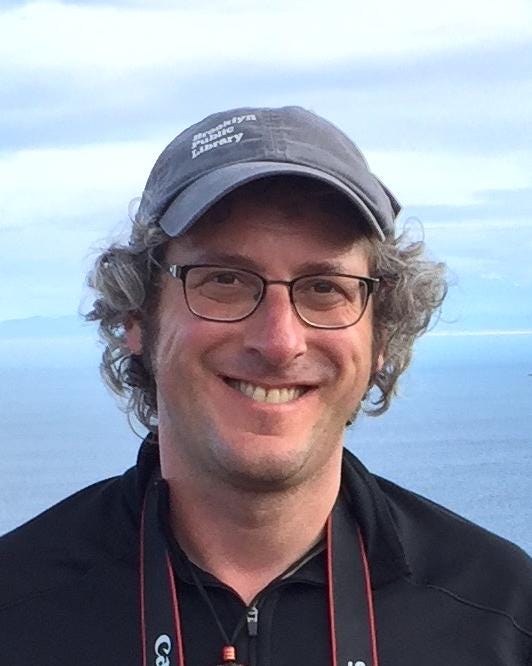
Today Razib talks to Noah Millman. Millman is an American screenwriter and filmmaker, as well as a political columnist and cultural critic based in Brooklyn, New York. He is the film and theater critic for Modern Age; previously he was a columnist for The Week (2015–2022) and a senior editor at The American Conservative (2012–2017). Millman writes the newsletter Gideon’s Substack, and his work has also appeared in outlets such as The New York Times and Politico. He graduated from Yale University and initially worked on Wall Street for 16 years, starting in a hedge fund's mail room, before leaving after the financial crisis to pursue creative endeavors full-time. Millman has been a producer on seven films, and written three and directed three. His most recent film is Resentment, and he is working on a novel, Fables of a Jewish Century.
Razib and Millman begin their conversation discussing their history as bloggers who began writing early in the first decade of the century, in the wake of George W. Bush’s invasion of Iraq. Millman discusses his disillusionment with neoconservatism, and his evolution into a moderate, if heterodox, Democrat. They also discuss their positionality in a political commentary landscape that has radically shifted over the last twenty years, and what it’s like to be strongly partisan. They discuss how their views of religion have changed, especially in the wake of the New Atheist movement after 9/11 and the emergence of psychedelic spirituality in the 2020s. Millman articulates his views as a Jew whose own theological commitments are minimal, stating that he believes that the “Hindus are right about God” but John Calvin was probably right about humans.
In the second half of the discussion, they pivot to the arts, beginning with how film as a medium has developed over the last generation, from the high tide of independent films in 1999 and through the “comic book” movie heyday of the 2010s, and on finally to the reemergence of more classic movies like Tom Cruise’s Top Gun: Maverick 2 and Brad Pitt’s F1. Razib argues that the Marvel universe exhausted its creative possibilities, and the same content no longer compels the younger generations, especially in a 90-minute format. Millman addresses whether film as a medium has reached the end of the line as a mass medium, and how fan-culture and “stan” culture has transformed the experience of the arts. He also asserts that cultural fragmentation is driven by technology, as consumers have a much greater range of options in their choices than in the past. Millman observes that as top-down cultural dynamics have collapsed, shifts are now driven by bottom-up drives. He also argues that movies will continue to be a major art form because filmmaking is now far cheaper than it was in the past, but he is not optimistic about the future of mass-market tent-pole films that can transcend myriad fan subcultures. Movie studios still do not know which films will become hits and which will flop, even the magic of Pixar and Marvel Studios are no longer a sure thing. In fact, Millman argues that fragmentation has masked the revival of art forms like the novel. As the gatekeepers are gone, many consume low art, with middle-aged people reading copious amounts of YA fiction. Millman argues that any aspiring artist needs to grapple with the competitive realities of the new attention economy. Technology has made it easier for anyone to create art because new tools are cheaper and self-publishing is now a real option for writers. However, all of this unleashed creativity is competing for the same amount of funding, support and a relatively fixed audience.