

Alex Nowrasteh: an immigration libertarian in Trump's America
Razib Khan's Unsupervised Learning
Release Date: 09/01/2025
 Chris Masterjohn: COVID-19 to mitochondrial health, communicating and applying "the science"
Razib Khan's Unsupervised Learning
Today, Razib talks to , a nutritional scientist and leading expert in mitochondrial biology who believes hidden energy bottlenecks underlie much of modern disease. After years of work as a professor and researcher, he founded , the first mitochondrial analysis designed for everyday health, and serves as its Scientific Director. His mission is to make mitochondrial testing accessible so people can identify and correct the specific energy limitations holding them back. After earning his PhD in Nutritional Sciences from the University of Connecticut in 2012, he completed a postdoctoral...
info_outline Mike White: academia and genomics in the 21st century
Razib Khan's Unsupervised Learning
On this episode of Unsupervised Learning, Razib talks to , a Genetics professor at the Washington University in St. Louis. White has a position at the School of Medicine in St. Louis, where he leads a research team focused on understanding the biophysical architecture of regulatory DNA. He earned a B.A. in music before pivoting to the sciences, receiving his Ph.D. in Biochemistry from the University of Rochester in 2006 and completing a postdoctoral fellowship at Wash U under Dr. Barak Cohen. White’s work combines functional genomics, synthetic biology, computational biology, and deep...
info_outline Aaron Renn: Heartland urbanism and leaving Left Behind behind
Razib Khan's Unsupervised Learning
On this episode of Unsupervised Learning Razib talks to . Renn is a , consultant, and known for his work on the challenges facing American cities and religious institutions in the 21st century. He is a contributor to and the author of , a book exploring the cultural shifts regarding Christianity in America. Renn previously served as a Senior Fellow at the Manhattan Institute for five years and as a contributing editor for City Journal, having established his voice on urban policy through his widely cited blog, . Prior to his career in...
info_outline Daniel Tabin: ancient DNA, the good, bad and ugly
Razib Khan's Unsupervised Learning
On this episode of Unsupervised Learning Razib talks to , a 5th-year Ph.D. student in in the Department of Human Evolutionary Biology. His research focuses on using ancient and modern DNA to answer questions about human history. Tabin completed a degree in Computer Science and Math and Master’s in Computer Science from Rensselaer Polytechnic Institute. He Ph.D. project involves the population genetic history of Central and East Asia. First, Razib and Tabin discuss he co-authored that looks at problematic results in the paleogenetic literature due to contamination...
info_outline Peter Nimitz: the story of the Slavs
Razib Khan's Unsupervised Learning
On this episode of Unsupervised Learning Razib talks to about . His Substack, titled , explores world history through the lenses of archaeology, paleogenetics, and historical processes. His writing focuses on "deep history," such as the Bronze Age Collapse and the migration of Indo-European peoples, while connecting these ancient shifts to broader patterns of civilizational rise and fall. Nimitz often integrates technical data from genetics and climate science to challenge traditional narratives about nomadic tribes and early state formations across Eurasia....
info_outline Jesse Arm: Gen Z Republicans and their views
Razib Khan's Unsupervised Learning
On this episode Razib talks to , VP of external affairs at the Manhattan Institute. His writing and commentary have appeared in the New York Times, Wall Street Journal, The Atlantic, New York Post, Fox News, City Journal and Jerusalem Post. Arm graduated with honors from the University of Michigan, where he majored in international political economy, and studied language and international affairs at Tel Aviv University. He has also worked for Senator Tom Cotton and Representative Dan Benishek, and the analytics arm of American Continental Group, a major...
info_outline Davide Piffer: how Europeans became white
Razib Khan's Unsupervised Learning
On this episode of Unsupervised Learning, Razib talks to , whose Substack examines genetic differences between populations. Piffer on human genetic variation for a decade, and recently started a Substack, , exploring similar issues in detail over a series of posts. Razib asks Piffer about the difficulties in analyzing polygenic scores from quantitative traits in ancient DNA samples. How does he do in technical terms, from genome quality to imputation to ancient populations from modern ones? Then, they discuss some of Piffer’s findings, in particular, his work...
info_outline Aneil Mallavarapu: why machine intelligence will never be conscious
Razib Khan's Unsupervised Learning
Today Razib talks to , a scientist and technology leader based in Austin, Texas, whose career bridges the fields of biochemistry, systems biology, and software engineering. He earned his doctorate in Biochemistry and Cell Biology from the University of California, and has held academic positions at Harvard Medical School, where he contributed to the Department of Systems Biology and developed the "Little b" programming language. Mallavarapu has transitioned from academic research into the tech and venture capital sectors, co-founding ventures such as Precise.ly and DeepDialog, and...
info_outline Richard Hanania: his break with the Right and the rise of kakistocracy
Razib Khan's Unsupervised Learning
On this episode Razib, talks to , a . Hanania holds a Ph.D. from UCLA, a J.D. from the University of Chicago, and an undergraduate degree from CU Boulder in linguistics. He is a regular contributor to the and , and has . Hanania is also the author of . Razib and Hanania talk about his new book , and his developing views on populism and immigration. They highlight the rise of populism on the Right, the rejection of cognitive elitism, and the impact of social media on political discourse. Hanania criticizes the far-right’s nativism,...
info_outline Francis Young: Baltic paganism in modern times
Razib Khan's Unsupervised Learning
On this episode, Razib talks to ,, a historian who teaches at Oxford. Young specialises in the history of religion and belief from ancient times to the present day, and provides expert indexes for academic books and translates medieval and early modern Latin. He holds a PhD from Cambridge University and is the author, editor or co-author of . On his last visit to the , he discussed his book , an account of the practices and persistence of Baltic paganism down to the 16th-century, the age of the Renaissance and Reformation. Today he discusses his new book, . Razib and...
info_outline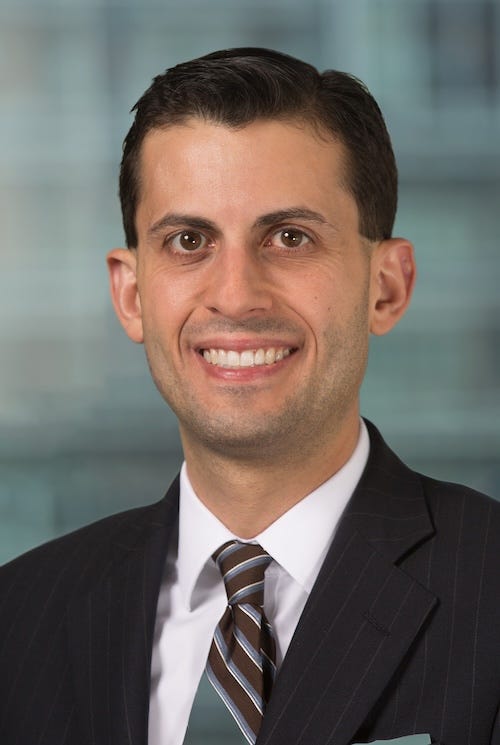
Three years ago, Razib recorded two podcasts with two immigration experts on different sides of the issue, Alex Nowrestah and Jason Richwhine. While Nowrasteh, who works for the libertarian Cato Institute as Vice President for Economic and Social Policy Studies, supports higher levels of legal immigration, Richwine, a Resident Scholar at the Center for Immigration Studies (CIS), favors lower levels of inflows into the US. The initial pair of podcasts was recorded in the midst of the massive increase in immigration that occurred after the loosening of the pandemic-era controls, resulting in the highest proportion of the foreign-born since the turn of the 20th century. Though the Biden administration tightened controls in its last year, the swell of illegal immigration resulted in a backlash that fueled the re-election of Donald Trump to the presidency and a turn in policy toward restriction. Recently, Razib recorded two conversations with Nowrestah and Richwine, revisiting the topic in 2025, and after three years of policy shifts.
Today, Razib talks to Nowrasteh about the record of the Biden administration, the pivot occurring in the first year of the Trump administration, and where he sees the Republicans going in the future. Nowrasteh addresses the reality that the Democratic administration's lack of interest in controlling illegal flows resulted in anger and frustration at migration in general, and emphasizes the importance of borders and rules in allowing for legal immigration. Razib and Nowrasteh also discuss the controversy over H1-Bs, the role that skilled immigration plays in buttressing American power, and the conflicts on the Right regarding how immigration policy relates to geopolitics. They also explore the relationship between immigration and population, and how both connect to urban policy and economic growth.