

 Is Canada's Democracy Underfunded?
The Biblio File hosted by Nigel Beale
Reading this on : Amid the threats to Canada’s nationhood in recent months and in the global context of social division and eroding democracy, Library and Archives Canada (LAC) has a unique and critical role to play in asserting Canada’s identity, promoting national unity and championing democratic principles. then seeing this further down the page: LAC is planning the following spending reductions: 2026-27: $11.1 million 2027-28: $14.7 million 2028-29: $22.1 million It is anticipated that these spending reductions will involve a decrease of approximately 161...
info_outline Nigel Newton on Gold-Digging, Fast Cars, Friendship, and Finding Harry Potter
The Biblio File hosted by Nigel Beale
has been in business for almost forty years. Last year it earned £361.0 million. Over the past five years it’s taken in more than £1.4 Billion. It’s one of, if not the most successful publishing ventures of the past century. How does this work? I asked Founder and Chief Executive Nigel Newton. Here we talk about, among other things, Frank Newton — Nigel’s prospecting, race car-driving grandfather; about Peter, his wine-making father; about book publishing and stock picking; the acquisition A&C Black; ; ‘romantasy’ and Sarah J. Maas; Liz Calder; floatation in...
info_outline Timothy Heyman on B. Traven and how to manage a literary archive
The Biblio File hosted by Nigel Beale
B. Traven's novels and stories have sold more than 30 million copies over the past century in more than 30 languages worldwide. He was Einstein's favourite novelist. Der Spiegel ranks his The Death Ship as the third greatest German novel ever written (okay in the past 100 years), after Thomas Mann's The Magic Mountain, and Kafka's The Castle; and yet, despite this, few today, in the English speaking world at least, have heard of him. It's only thanks to the movie, The Treasure of Sierra Madre, based on one of his stories, that he's known here at all. Why is this? ...
info_outline David McKnight on Collecting The Beatles
The Biblio File hosted by Nigel Beale
Some years ago he’d hunted down and later donated to the University of Alberta’s Bruce Peel Library. It was very easy to get caught up in David’s enthusiasm, and I was really . Shortly after our conversation I learned that he didn’t just collect Canadian poetry, he was also a serious Beatles collector. We stayed in touch. I drove down to Philadelphia where David hosted me at his home for a weekend. We got a lot done. Took the train into New York for the opening of a film about a bookseller; went on a tour of the rare book and manuscript library at the University of...
info_outline Michael Erdman on the history of magazines (and women's rights) in Turkey
The Biblio File hosted by Nigel Beale
Michael Erdman is Head of with overall responsibility for all manuscript holdings in Arabic, Armenian, Azerbaijani, Chagatai, Coptic, Hebrew, Kurdish, Ottoman Turkish, Persian, and Syriac. I talked with him about my recent magazine hunting exploits in Istanbul, and how what we found fits into the overall history of magazine publishing in Turkey. Esoteric, I know, but hey, this is where passion takes you.
info_outline Andres M. Zervigon on Illustrated Magazines
The Biblio File hosted by Nigel Beale
I first came across Andrés Mario Zervigón’s (Cuban) name while researching a magazine that filled me with awe the first time I saw it. AIZ, the Arbeiter-Illustrierte-Zeitung (Workers Illustrated Magazine) is an illustrated, mass circulation German periodical that was published in Berlin during the 1920s and 1930s (in Prague after 1933). It contains some of the most emotionally charged imagery I’ve ever seen. The best work was by John Heartfield. Zervigón is professor of the history of photography at Rutgers University in New Jersey. He obtained his PhD from Harvard University in...
info_outline Tony Fekete on Collecting Erotica
The Biblio File hosted by Nigel Beale
is a book collector who for years specialized in collecting erotica. He's best known for the catalogue he produced for a Christie’s auction that took place in 2014 that featured highlights from his collection. More than 200 books, manuscripts, lithographs and erotic photographs went up for sale, including a first edition of My Secret Life (1888), an eleven-volume memoir that describes in detail the sex life of an anonymous Victorian "Gentleman," of which only twenty-five copies were...
info_outline Siegfried Lukatis on Insel Bucherei, the iconic German book series
The Biblio File hosted by Nigel Beale
Siegfried Lokatis is a retired professor of book history, and former head of the University of Leipzig's Institute for Communication and Media Studies. He is the author of Book Covers of the GDR and is currently working on a history of the S. Fischer publishing house, due out in 2026. We met in Leipzig recently where Siegfried treated me to a tour of the splendid Insel Bucherei book collection. Founded in 1912, the series now contains some 2,000 titles (and still counting according to Jonathan Landgrebe, head of Suhrkamp Verlag, the company that today produces the books). The...
info_outline Richard Charkin on Lessons Learned from 50 Years in Book Publishing
The Biblio File hosted by Nigel Beale
has held senior posts at many major, and some minor, publishing houses in the U.K. over the past 50 years, including: Harrap, OUP, Pergamon Press, Reed Elsevier, Macmillan, Bloomsbury, and . He is former President of The Book Society, the International Publishers Association and the UK Publishers Association. His book My Back Pages, came out in 2023. The book has sold more than 3,000 copies, and is being translated into four languages. It took me a year to figure out what questions to ask him. Just so you know, Richard has been very good to The Biblio...
info_outline Book scholar Jonathan Rose on who used to read Playboy magazine and Why
The Biblio File hosted by Nigel Beale
The last time I ran into renowned book scholar Jonathan Rose () he mentioned that he was doing some work on Playboy magazine. ‘Way more women readers than you’d expect!’ he told me. Rose is an accomplished author. His groundbreaking and award-winning book, The Intellectual Life of the British Working Classes, first published in 2001, is selling in its third edition and has been translated into multiple languages. I emailed him recently. He directed me to a paper he’d delivered entitled Readers, Magazines, Playboy, Market Research: The Daniel...
info_outlineReading this on Library and Archives Canada’s website:
Amid the threats to Canada’s nationhood in recent months and in the global context of social division and eroding democracy, Library and Archives Canada (LAC) has a unique and critical role to play in asserting Canada’s identity, promoting national unity and championing democratic principles.
then seeing this further down the page:
LAC is planning the following spending reductions:
2026-27: $11.1 million
2027-28: $14.7 million
2028-29: $22.1 million
It is anticipated that these spending reductions will involve a decrease of approximately 161 full-time equivalents by 2028-29. (my italics)
put me in mind of this
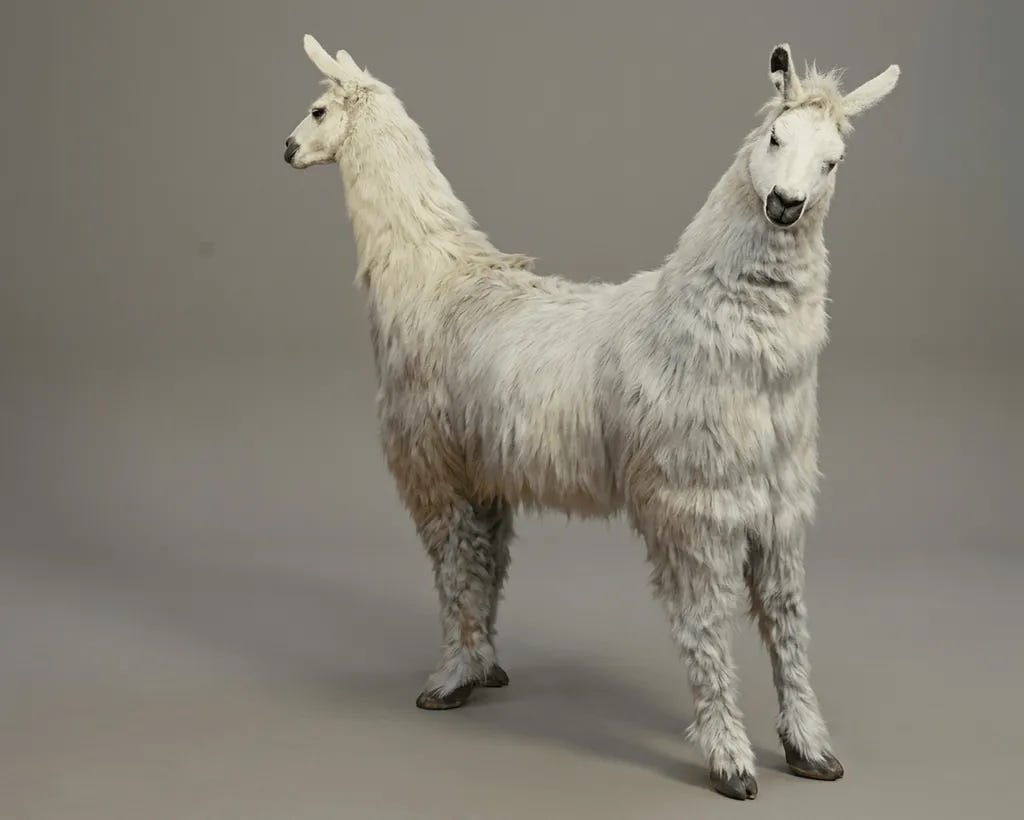
How can you assert, promote, or champion anything when your budget is being slashed? How can Canadians - historians, bibliophiles, citizens - understand, learn and write about their own country when they can’t access the historial record in a timely fashion?
If these cuts are for real, then the Carney government is talking out of both sides of its mouth, happier when Canadians don’t look at their own history. This, in fact, is exactly what some of Canada’s top historians are saying.
To get to some kind of truth, I figured the time was right to go back in and talk with Leslie Weir, Canada’s national Librarian and Archivist, in hopes she could set me in the right direction.
Leslie was appointed head of LAC in 2019 (we first talked shortly after her appointment. Listen to that conversation here). Prior to this she was Librarian at the University of Ottawa, from 2003 to 2018.
A past president of the Canadian Association of Research Libraries, Leslie is, in addition to her currently duties in Canada, President of the International Federation of Library Associations and Institutions (IFLA), until 2027.
We met at her offices in Ottawa at 395 Wellington Street.
I reference Voltaire briefly during our conversation. Voltaire revelled in pointing out gaps between rhetoric and reality. How, for example, could a church that preached love and forgiveness, at the same time condemn innocent people to be torn limb from limb in the public squares?
I end off the interview with three quotes from him:
“It’s dangerous to be right in matters on which the established authorities are wrong”
“ To the living we owe respect, but to the dead we owe only the truth.”
“Doubt is not a pleasant condition, but certainty is absurd.”
Here’s another to end off this introduction:
“Those who can make you believe absurdities can make you commit atrocities.”