

The Year-End Review That Actually Helps You Plan Your Next Year - BLOG
Release Date: 01/08/2026
 Where I’ve Been: Falling in Love with Life Offline - S6, E1
Finding Joy in Your Home
After the longest podcast break I’ve ever taken, I’m finally back! In this episode, I’m sharing where I’ve been, why I disappeared for over six months, and what God has been teaching me through a long season of transition, rebuilding, and learning to love a quieter life offline. I’m talking about our family’s move, settling into a new home and community, healing after a hard year, stepping back from social media, getting a “dumb phone,” rebuilding routines, and rediscovering the joy of creating from a place of life and overflow instead of hurry and burnout. This episode kicks...
info_outline What a Large Family Produces (From Someone Who Lived It): The joys & blessings of a large family - BLOG
Finding Joy in Your Home
In Part 1 of this series, I asked the question: Welcome to part 2. I’m the oldest of four kids, which, in my mind growing up, did not feel like a large family. But apparently… it was and is especially now! People used to ask my mom if we were all from the same dad (which was always baffling because we all look like clones). And now, looking back, I realize: okay, yes, even four kids is considered “a lot” these days. But my husband Jason? He’s the oldest of seven. And now here we are with eight kids of our own…ages 13 down to 1. Our next door neighbors and good friends from church...
info_outline How I'm Rebuilding My Bulk Pantry (step by step) - BLOG
Finding Joy in Your Home
I originally wrote this article in April and I'm finally getting around to publishing it. I'm about to place 5th Azure order and it indeed has already made a huge difference in our budget (see the bottom of the article)! Over the years, I've developed quite a system for storing and cooking out of a bulk pantry. I routinely buy 25-50lb bags of dried goods and cook almost everything from scratch. Now, 10+ years into this journey, I take for granted how easy this system is to maintain. But when I first started out, it was anything but. I remember googling "How to store 25lbs of spelt" and...
info_outline I Quit the Noise—and Found My Mind Again: Learning to Be a Calm Woman in an Anxious Age - BLOG
Finding Joy in Your Home
If you’ve been feeling stressed, weighed down, worried, or just quietly unsettled lately… this is for you. I’ve walked through cycles of this myself over the past few years. Since 2020 especially, it has felt like a constant hum beneath everything, an undercurrent of tension that never quite goes away, especially when one is chronically online. And somewhere along the way, I realized I didn’t want to live like that anymore. So I stepped off the hamster wheel. I’ve been largely off social media since early January. I still check in occasionally as needed, messages, customer...
info_outline Can You Really Raise a Large Family Well? - BLOG
Finding Joy in Your Home
Rediscovering God’s design for family in a world that sees children as a burden I have mostly been off of social media entirely since early January when I got my new "dumb-ish" phone for my birthday. But even so, news reached me that Hannah Neeleman from Ballarina Farms had her 9th baby. And that the internet has imploded over it. I'm honestly not sure what is so shocking about a Mormon mom, who's had 8 previous babies, presumably every 1/5 - 2 years for over a decade, now having one more child. Like, don't you expect it by now? But nevertheless, baby #9 is here, and the interwebs have...
info_outline My 40 Before 40 Reading List - Working on the Western Canon - BLOG
Finding Joy in Your Home
For the first time in a couple of years, I've really been enjoying my reading list! I've set a goal of reading 104 books this year, at a clipped pace of 2 books per week. Here at the end of February, I've managed to stay on track with this goal and hope to see it through this year. Part of my renewed vigor with reading is that it has now been 4+ years since I've gone this long without being pregnant. In fact, 2026 might be the first year that I will not have a nursing baby or be pregnant since 2019 (7 years, wow)! In fact, I've only had two years (2013 and 2018) since 2011 that I have not been...
info_outline How to Grow as a Homemaker (Without Feeling Behind) - BLOG
Finding Joy in Your Home
When I first got married, I was behind. Admittedly, I was only nineteen. That alone explains part of it. But if I am completely honest, I do not think that five more years would have made much difference. Even if I had finished college as a single woman instead of a married one, even if I had waited until twenty-four or twenty-five, I do not believe I would have been significantly more prepared to run a home. Like many women of my generation, I had spent my teenage and young adult years focused on school, grades, college applications, part-time jobs, and preparing for a future career. I...
info_outline My Garden Journal: February 2026 - BLOG
Finding Joy in Your Home
I am deep in the part of my gardening year where I am SUPER excited… and also starting to wonder if maybe I did too much. If you garden, you know this feeling. January and February are all hope and seed packets and plans. Everything feels possible. And then suddenly your dining room table is covered in milk cartons and seed trays and you’re counting how many varieties of peppers you started and thinking, “Oh dear.” But here’s something I’ve learned in my still-limited gardening experience: I would rather feel like I did too much than look back in July and wish I had done more....
info_outline A Trip to Pennsylvania, A Pause in Blogging, and Some Honest Reflections - BLOG
Finding Joy in Your Home
The kids and I had the opportunity to go visit my family in Pennsylvania this past week, and I’m so incredibly glad we did. We’ve been trying to schedule a trip up there for ages, and it just never seemed to work out. There was always something — a launch, a deadline, a busy season, a reason to push it off. Finally, we picked a time that worked… except Jason was just too busy to take off work. So the kids and I went anyway. And I’m so, so glad we did. With the older boys getting so much older, it was actually such a fun and easy trip. An 8–9 hour drive used to feel monumental, but...
info_outline Homemaking Is Not About Perfection, It’s About Faithfulness - S5, E8
Finding Joy in Your Home
In a world full of Pinterest-perfect homes and constant comparison, it’s easy to feel like our homemaking is never “enough.” In this short and encouraging episode, Jami offers a much-needed reminder: homemaking isn’t about perfection, it’s about faithfulness. She shares why social media can quietly distort our expectations, how God calls us to stewardship instead of performance, and why the quiet, repetitive work of home is deeply meaningful to Him. From folding laundry and stretching a tight budget to caring for sick kids in the middle of the night, faithfulness often looks ordinary...
info_outlineIf you’ve been following along in this goal-setting series, you already know I’m not interested in hype-y, pressure-filled planning that burns you out by week two. I want plans that actually fit your real life and help you grow in faithfulness, peace, and purpose.
And that starts with something most of us skip.
Before we make new goals… before we build new routines… before we write a single list for the year ahead… we need to do the very first (and honestly, most clarifying) step:
Look back on last year with an accurate view.
Not through the lens of guilt. Not through the lens of “I should’ve done more.”
But with honesty, gratitude, and wisdom, so we can see what really worked, what quietly wasn’t working, and what God may be inviting us into next.
Because you don’t need a perfect fresh start date to move forward.
You need clarity. And clarity almost always begins by looking back.
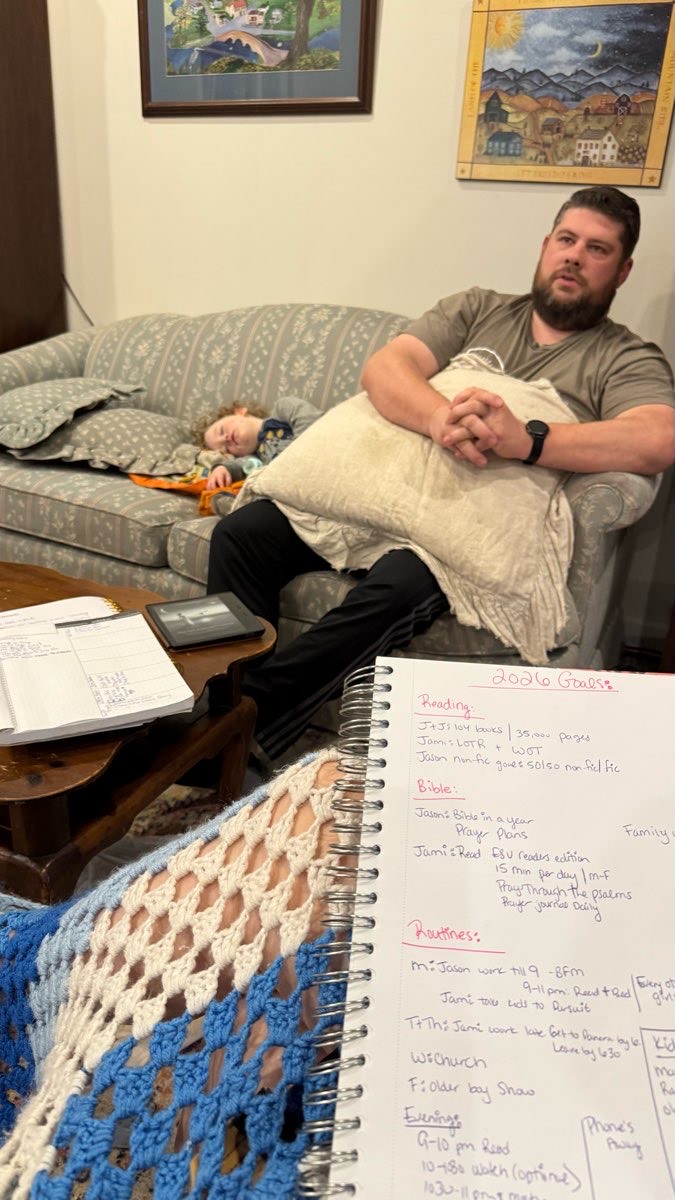
Why a Year-End Review Matters (Before You Set Goals)
Most of us skip straight to the “new year plan.” New routines! New schedules! New systems! New goals!
But if you don’t pause to look back first, you’ll almost always do one of two things:
-
Repeat the same patterns (because you never identified what actually wasn’t working), or
-
Make an unrealistic plan that looks great on paper and falls apart by week two (ME! I do this!!)
A year-end review helps you slow down and ask:
-
What actually helped our home feel peaceful?
-
What consistently made things feel chaotic?
-
Where did my priorities drift?
-
What’s one small change that would make life noticeably better?
That’s where real planning begins.
Step 1: Start With Gratitude (This Matters More Than You Think)
Before you evaluate what needs to change, start with what’s good.
Not because everything was easy, but because gratitude reorients your heart. It helps you see that God was present, even in a hard year.
Try writing down:
-
A few things you’re thankful for from this past year
-
A handful of answered prayers (big or small)
-
Small joys you don’t want to forget
And if you have the energy? Keep going. Some of the sweetest year-end reviews happen when you turn the paper over and just keep writing.
Gratitude doesn’t erase the hard things. But it keeps your review from becoming grumbling, complaining, or self-condemnation.
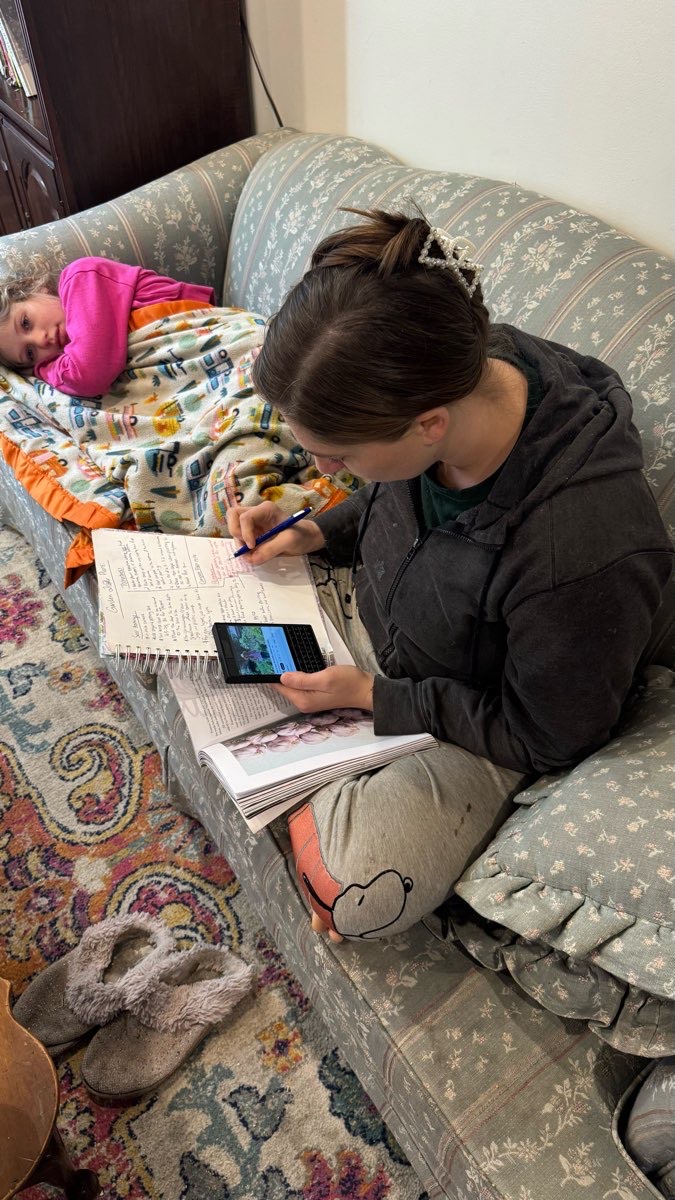
Step 2: Ask Your Family What They Remember
This part surprises people every time. Because we tend to assume we know what mattered most, what made the year “good” or “hard”, but your husband and kids might remember something completely different.
Ask them:
-
“What was your favorite memory this year?”
-
“What are you thankful for from this year?”
-
“What did you love doing as a family?”
And don’t be surprised if their answer is something simple. Not the big trip or the elaborate holiday moment.
Sometimes it’s: “Remember when you played Legos with me?” And you’re like… Really? That’s the moment you held onto?
Yes. And that’s such a sweet reminder of what actually lands in your kids’ hearts.
Step 3: Name the Hardest Thing (Without Over-Explaining It)
A year-end review isn’t complete without honesty.
Write down the hardest thing about the year: just a sentence or two.
-
Was it a hard season emotionally?
-
Health issues?
-
A new baby?
-
A move?
-
A stressful schedule?
-
A lack of routine that slowly turned into chaos?
You don’t have to process your whole life on one sheet of paper. The goal is simply to acknowledge reality. Because naming the hard thing helps you stop carrying it like a fog you can’t explain.
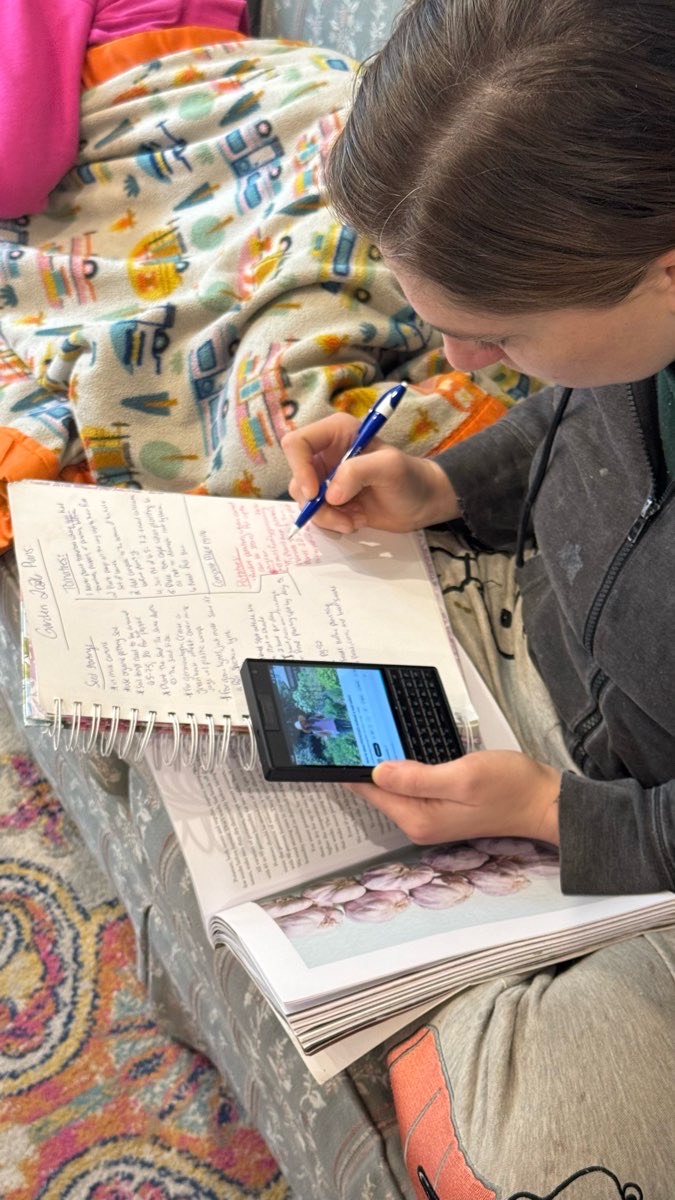
Step 4: Evaluate Your Life in the Right Order
This is where year-end review becomes deeply grounding.
Instead of starting with “my home” (which is where many of us start), evaluate in this order:
-
My relationship with God
-
My marriage and parenting
-
My home and homemaking
Because you can have the most perfectly clean house in the world… and if your heart is dry and your relationships are hurting, a sparkling kitchen doesn’t fix that.
So ask three simple questions in each category:
1) My relationship with God
-
What worked?
-
What didn’t work?
-
What needs to shift?
This doesn’t have to be dramatic. It might be:
-
What worked: “I found a Bible reading plan I actually liked.”
-
What didn’t work: “I didn’t make time for it consistently.”
Even that insight is valuable, because now you’re not stuck in vague guilt, you’re seeing a clear next step.
2) My marriage and parenting
-
What strengthened connection this year?
-
What consistently caused tension?
-
What rhythms do we need more of?
Sometimes the issue isn’t that you need a better routine. Sometimes you need more margin, more communication, or more intentional time together.
3) My home and homemaking
This is where you can finally get practical:
-
What routines brought peace?
-
What areas spiraled into overwhelm?
-
What one or two “pain points” made everything feel harder?
For many women, the big culprits are:
-
Laundry
-
Meal planning / kitchen rhythm
-
Bedtime / sleep habits
-
Morning routine (which is often tied to evening routine)
And here’s what I’ve found: often there are one or two small changes that would make your whole home feel lighter. But you can’t see them when you’re overwhelmed and thinking, “Everything is awful.” A year-end review helps you pinpoint what’s actually happening.
Step 5: Look for Patterns (Not Perfection)
You’re not doing this review to judge yourself. You’re doing it to notice patterns.
For example:
-
If you’re always stressed in the morning, check your evening routine.
-
If your home feels chaotic, look for one “keystone habit” (like laundry or dishes) that affects everything else.
-
If you keep falling off routines when life gets hard, your next plan needs more flexibility, not more intensity.
This is where a lot of women have a breakthrough: They don’t need a bigger plan. They need a smaller plan they can actually stick to.
Step 6: Choose “Small and Sustainable” for the New Year
This is the part that changes everything. Because many of us want to set a 30-point checklist… or a 130-point checklist… and overhaul our whole life in one week. And it doesn’t work. (Ask me how I know.)
Instead, as you plan your next year, ask:
-
What’s one priority God is putting on my heart right now?
-
What’s one routine that would serve my family well in this season?
-
What’s one tiny habit that would make the biggest difference?
Small changes feel insignificant in the moment, but over time they build a completely different home.
A Gentle Reminder If You Feel Behind
If you read this and realize, “Wow, I really didn’t do the planning I wanted to do,” let me remind you: It’s not too late. Not even a little bit. Today is a new day. God’s mercies are new every morning.
So don’t beat yourself up.
Don’t wallow in guilt.
Don’t throw in the towel because you missed an “ideal” start date.
Just take the next faithful step.
Your Simple Year-End Review Prompts:
If you want a quick place to start, here you go:
-
What am I thankful for from this past year?
-
What are my 5 favorite memories?
-
What was the hardest thing about this year?
-
What worked in my relationship with God? What didn’t?
-
What worked in my marriage/parenting? What didn’t?
-
What worked in my home/homemaking? What didn’t?
-
What is one small change that would make the next season feel more peaceful?
Then pray:
“Lord, give me clarity and wisdom. Show me what matters most. Help me take action with humility and joy.”
Want to Do This Together?
If you’d like hands-on help with planning and goal setting, I’m hosting live trainings January 12–16 inside our Planning & Goal Setting course.
Each day we’ll meet live, I’ll teach you how to:
- set realistic goals
- break them into action steps
- plan in a way that works with your life (not against it)
You’ll also receive all of my planning worksheets so you can take immediate action.
If you’ve struggled to make goals that stick—and you want 2026 to be different—join me for our 3rd annual planning retreat. We’ll do it together.
Sign Up Here!

If you’ve been following along in this goal-setting series, you already know I’m not interested in hype-y, pressure-filled planning that burns you out by week two. I want plans that actually fit your real life and help you grow in faithfulness, peace, and purpose.
And that starts with something most of us skip.
Before we make new goals… before we build new routines… before we write a single list for the year ahead… we need to do the very first (and honestly, most clarifying) step:
Look back on last year with an accurate view.
Not through the lens of guilt. Not through the lens of “I should’ve done more.”
But with honesty, gratitude, and wisdom, so we can see what really worked, what quietly wasn’t working, and what God may be inviting us into next.
Because you don’t need a perfect fresh start date to move forward.
You need clarity. And clarity almost always begins by looking back.
Why a Year-End Review Matters (Before You Set Goals)
Most of us skip straight to the “new year plan.” New routines! New schedules! New systems! New goals!
But if you don’t pause to look back first, you’ll almost always do one of two things:
-
Repeat the same patterns (because you never identified what actually wasn’t working), or
-
Make an unrealistic plan that looks great on paper and falls apart by week two (ME! I do this!!)
A year-end review helps you slow down and ask:
-
What actually helped our home feel peaceful?
-
What consistently made things feel chaotic?
-
Where did my priorities drift?
-
What’s one small change that would make life noticeably better?
That’s where real planning begins.
Step 1: Start With Gratitude (This Matters More Than You Think)
Before you evaluate what needs to change, start with what’s good.
Not because everything was easy, but because gratitude reorients your heart. It helps you see that God was present, even in a hard year.
Try writing down:
-
A few things you’re thankful for from this past year
-
A handful of answered prayers (big or small)
-
Small joys you don’t want to forget
And if you have the energy? Keep going. Some of the sweetest year-end reviews happen when you turn the paper over and just keep writing.
Gratitude doesn’t erase the hard things. But it keeps your review from becoming grumbling, complaining, or self-condemnation.
Step 2: Ask Your Family What They Remember
This part surprises people every time. Because we tend to assume we know what mattered most, what made the year “good” or “hard”, but your husband and kids might remember something completely different.
Ask them:
-
“What was your favorite memory this year?”
-
“What are you thankful for from this year?”
-
“What did you love doing as a family?”
And don’t be surprised if their answer is something simple. Not the big trip or the elaborate holiday moment.
Sometimes it’s: “Remember when you played Legos with me?” And you’re like… Really? That’s the moment you held onto?
Yes. And that’s such a sweet reminder of what actually lands in your kids’ hearts.
Step 3: Name the Hardest Thing (Without Over-Explaining It)
A year-end review isn’t complete without honesty.
Write down the hardest thing about the year: just a sentence or two.
-
Was it a hard season emotionally?
-
Health issues?
-
A new baby?
-
A move?
-
A stressful schedule?
-
A lack of routine that slowly turned into chaos?
You don’t have to process your whole life on one sheet of paper. The goal is simply to acknowledge reality. Because naming the hard thing helps you stop carrying it like a fog you can’t explain.
Step 4: Evaluate Your Life in the Right Order
This is where year-end review becomes deeply grounding.
Instead of starting with “my home” (which is where many of us start), evaluate in this order:
-
My relationship with God
-
My marriage and parenting
-
My home and homemaking
Because you can have the most perfectly clean house in the world… and if your heart is dry and your relationships are hurting, a sparkling kitchen doesn’t fix that.
So ask three simple questions in each category:
1) My relationship with God
-
What worked?
-
What didn’t work?
-
What needs to shift?
This doesn’t have to be dramatic. It might be:
-
What worked: “I found a Bible reading plan I actually liked.”
-
What didn’t work: “I didn’t make time for it consistently.”
Even that insight is valuable, because now you’re not stuck in vague guilt, you’re seeing a clear next step.
2) My marriage and parenting
-
What strengthened connection this year?
-
What consistently caused tension?
-
What rhythms do we need more of?
Sometimes the issue isn’t that you need a better routine. Sometimes you need more margin, more communication, or more intentional time together.
3) My home and homemaking
This is where you can finally get practical:
-
What routines brought peace?
-
What areas spiraled into overwhelm?
-
What one or two “pain points” made everything feel harder?
For many women, the big culprits are:
-
Laundry
-
Meal planning / kitchen rhythm
-
Bedtime / sleep habits
-
Morning routine (which is often tied to evening routine)
And here’s what I’ve found: often there are one or two small changes that would make your whole home feel lighter. But you can’t see them when you’re overwhelmed and thinking, “Everything is awful.” A year-end review helps you pinpoint what’s actually happening.
Step 5: Look for Patterns (Not Perfection)
You’re not doing this review to judge yourself. You’re doing it to notice patterns.
For example:
-
If you’re always stressed in the morning, check your evening routine.
-
If your home feels chaotic, look for one “keystone habit” (like laundry or dishes) that affects everything else.
-
If you keep falling off routines when life gets hard, your next plan needs more flexibility, not more intensity.
This is where a lot of women have a breakthrough: They don’t need a bigger plan. They need a smaller plan they can actually stick to.
Step 6: Choose “Small and Sustainable” for the New Year
This is the part that changes everything. Because many of us want to set a 30-point checklist… or a 130-point checklist… and overhaul our whole life in one week. And it doesn’t work. (Ask me how I know.)
Instead, as you plan your next year, ask:
-
What’s one priority God is putting on my heart right now?
-
What’s one routine that would serve my family well in this season?
-
What’s one tiny habit that would make the biggest difference?
Small changes feel insignificant in the moment, but over time they build a completely different home.
A Gentle Reminder If You Feel Behind
If you read this and realize, “Wow, I really didn’t do the planning I wanted to do,” let me remind you: It’s not too late. Not even a little bit. Today is a new day. God’s mercies are new every morning.
So don’t beat yourself up.
Don’t wallow in guilt.
Don’t throw in the towel because you missed an “ideal” start date.
Just take the next faithful step.
Your Simple Year-End Review Prompts:
If you want a quick place to start, here you go:
-
What am I thankful for from this past year?
-
What are my 5 favorite memories?
-
What was the hardest thing about this year?
-
What worked in my relationship with God? What didn’t?
-
What worked in my marriage/parenting? What didn’t?
-
What worked in my home/homemaking? What didn’t?
-
What is one small change that would make the next season feel more peaceful?
Then pray:
“Lord, give me clarity and wisdom. Show me what matters most. Help me take action with humility and joy.”
Want to Do This Together?
If you’d like hands-on help with planning and goal setting, I’m hosting live trainings January 12–16 inside our Planning & Goal Setting course.
Each day we’ll meet live, I’ll teach you how to:
- set realistic goals
- break them into action steps
- plan in a way that works with your life (not against it)
You’ll also receive all of my planning worksheets so you can take immediate action.
If you’ve struggled to make goals that stick—and you want 2026 to be different—join me for our 3rd annual planning retreat. We’ll do it together.
sign up here: https://findingjoyinyourhome.com/planning