

What a “Good Homemaker” Really Is (and What She Isn’t) - BLOG
Release Date: 01/19/2026
 Where I’ve Been: Falling in Love with Life Offline - S6, E1
Finding Joy in Your Home
After the longest podcast break I’ve ever taken, I’m finally back! In this episode, I’m sharing where I’ve been, why I disappeared for over six months, and what God has been teaching me through a long season of transition, rebuilding, and learning to love a quieter life offline. I’m talking about our family’s move, settling into a new home and community, healing after a hard year, stepping back from social media, getting a “dumb phone,” rebuilding routines, and rediscovering the joy of creating from a place of life and overflow instead of hurry and burnout. This episode kicks...
info_outline What a Large Family Produces (From Someone Who Lived It): The joys & blessings of a large family - BLOG
Finding Joy in Your Home
In Part 1 of this series, I asked the question: Welcome to part 2. I’m the oldest of four kids, which, in my mind growing up, did not feel like a large family. But apparently… it was and is especially now! People used to ask my mom if we were all from the same dad (which was always baffling because we all look like clones). And now, looking back, I realize: okay, yes, even four kids is considered “a lot” these days. But my husband Jason? He’s the oldest of seven. And now here we are with eight kids of our own…ages 13 down to 1. Our next door neighbors and good friends from church...
info_outline How I'm Rebuilding My Bulk Pantry (step by step) - BLOG
Finding Joy in Your Home
I originally wrote this article in April and I'm finally getting around to publishing it. I'm about to place 5th Azure order and it indeed has already made a huge difference in our budget (see the bottom of the article)! Over the years, I've developed quite a system for storing and cooking out of a bulk pantry. I routinely buy 25-50lb bags of dried goods and cook almost everything from scratch. Now, 10+ years into this journey, I take for granted how easy this system is to maintain. But when I first started out, it was anything but. I remember googling "How to store 25lbs of spelt" and...
info_outline I Quit the Noise—and Found My Mind Again: Learning to Be a Calm Woman in an Anxious Age - BLOG
Finding Joy in Your Home
If you’ve been feeling stressed, weighed down, worried, or just quietly unsettled lately… this is for you. I’ve walked through cycles of this myself over the past few years. Since 2020 especially, it has felt like a constant hum beneath everything, an undercurrent of tension that never quite goes away, especially when one is chronically online. And somewhere along the way, I realized I didn’t want to live like that anymore. So I stepped off the hamster wheel. I’ve been largely off social media since early January. I still check in occasionally as needed, messages, customer...
info_outline Can You Really Raise a Large Family Well? - BLOG
Finding Joy in Your Home
Rediscovering God’s design for family in a world that sees children as a burden I have mostly been off of social media entirely since early January when I got my new "dumb-ish" phone for my birthday. But even so, news reached me that Hannah Neeleman from Ballarina Farms had her 9th baby. And that the internet has imploded over it. I'm honestly not sure what is so shocking about a Mormon mom, who's had 8 previous babies, presumably every 1/5 - 2 years for over a decade, now having one more child. Like, don't you expect it by now? But nevertheless, baby #9 is here, and the interwebs have...
info_outline My 40 Before 40 Reading List - Working on the Western Canon - BLOG
Finding Joy in Your Home
For the first time in a couple of years, I've really been enjoying my reading list! I've set a goal of reading 104 books this year, at a clipped pace of 2 books per week. Here at the end of February, I've managed to stay on track with this goal and hope to see it through this year. Part of my renewed vigor with reading is that it has now been 4+ years since I've gone this long without being pregnant. In fact, 2026 might be the first year that I will not have a nursing baby or be pregnant since 2019 (7 years, wow)! In fact, I've only had two years (2013 and 2018) since 2011 that I have not been...
info_outline How to Grow as a Homemaker (Without Feeling Behind) - BLOG
Finding Joy in Your Home
When I first got married, I was behind. Admittedly, I was only nineteen. That alone explains part of it. But if I am completely honest, I do not think that five more years would have made much difference. Even if I had finished college as a single woman instead of a married one, even if I had waited until twenty-four or twenty-five, I do not believe I would have been significantly more prepared to run a home. Like many women of my generation, I had spent my teenage and young adult years focused on school, grades, college applications, part-time jobs, and preparing for a future career. I...
info_outline My Garden Journal: February 2026 - BLOG
Finding Joy in Your Home
I am deep in the part of my gardening year where I am SUPER excited… and also starting to wonder if maybe I did too much. If you garden, you know this feeling. January and February are all hope and seed packets and plans. Everything feels possible. And then suddenly your dining room table is covered in milk cartons and seed trays and you’re counting how many varieties of peppers you started and thinking, “Oh dear.” But here’s something I’ve learned in my still-limited gardening experience: I would rather feel like I did too much than look back in July and wish I had done more....
info_outline A Trip to Pennsylvania, A Pause in Blogging, and Some Honest Reflections - BLOG
Finding Joy in Your Home
The kids and I had the opportunity to go visit my family in Pennsylvania this past week, and I’m so incredibly glad we did. We’ve been trying to schedule a trip up there for ages, and it just never seemed to work out. There was always something — a launch, a deadline, a busy season, a reason to push it off. Finally, we picked a time that worked… except Jason was just too busy to take off work. So the kids and I went anyway. And I’m so, so glad we did. With the older boys getting so much older, it was actually such a fun and easy trip. An 8–9 hour drive used to feel monumental, but...
info_outline Homemaking Is Not About Perfection, It’s About Faithfulness - S5, E8
Finding Joy in Your Home
In a world full of Pinterest-perfect homes and constant comparison, it’s easy to feel like our homemaking is never “enough.” In this short and encouraging episode, Jami offers a much-needed reminder: homemaking isn’t about perfection, it’s about faithfulness. She shares why social media can quietly distort our expectations, how God calls us to stewardship instead of performance, and why the quiet, repetitive work of home is deeply meaningful to Him. From folding laundry and stretching a tight budget to caring for sick kids in the middle of the night, faithfulness often looks ordinary...
info_outlineHomemaking Is Bigger Than a Job Title
When most people hear the word homemaker, they picture one specific life: a stay-at-home mom, in an apron, with dinner simmering and a spotless house to match. And if that’s your life right now, I hope you feel encouraged in it (this is my life, more or less with the spotless house). But if that’s not your life, if you work outside the home, if you’re a student, if you live with your parents, if you’re single, if you’re caring for aging family members, if your season feels anything but neat and tidy—I want you to stay with me.
Because homemaking is not a modern job description. It’s a calling of stewardship, love, and spiritual formation that looks different in different seasons. And the sooner we stop treating homemaking like a narrow label, the sooner we can actually live it with freedom, clarity, and joy.
I didn’t grow up training for home
I got married at nineteen, which still makes me laugh because I truly didn’t see that coming. I wasn’t raised in a culture that was telling me to marry young. I was the typical public school kid: college plans, big ideas, and a quiet assumption that “real life” would begin after a degree.
But then God wrote a different story. I met Jason when I was sixteen, we started dating when I was seventeen, and I was married before I ever felt remotely “prepared.”
And to be honest? I had almost no homemaking skills. Okay no, actually zero homemaking skills.
I didn’t know how to cook. I didn’t know how to manage a home. I barely knew how to do my own laundry, and I certainly wasn’t walking into marriage with some kind of mental framework for how a household runs. There wasn’t a built-in “curriculum” for real life skills where I grew up, and I know I’m not alone in that. A lot of millennials were well-trained to take tests, write papers, get into college… and then suddenly found themselves staring at adulthood thinking, Wait—how do I feed people every day? How do I budget? How do I keep a home from slowly falling apart?
So those early years of my blog (back when it was The Young Wife’s Guide) and the earliest days of the podcast were really me working this out in real time. I was trying to answer basic but weighty questions: What does it mean to care for a family? What is a wife responsible for? What does a biblical vision of home even look like when both spouses are working and in school full-time, as we were? How do you build a life that honors God when you don’t feel naturally gifted at managing the practical side of a household?
I didn’t have this figured out when I started. I was learning while I lived it.
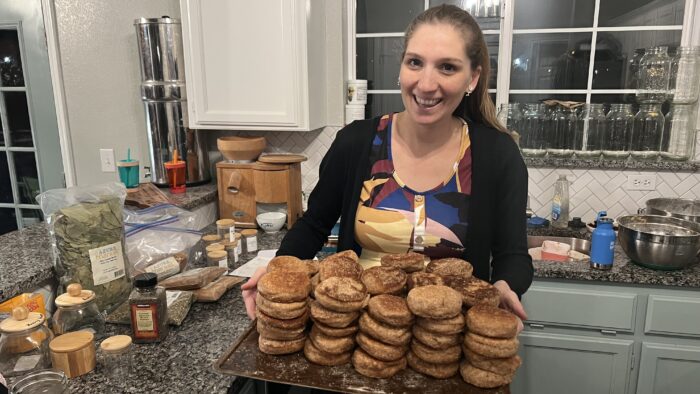
Homemaking is a calling for women in every season
Here’s my “controversial” take, and I’ll say it plainly: if you are a woman, you are a homemaker.
Not because every woman is called to the exact same routine, or because every woman’s life will look like mine, or because your worth is somehow tied to whether you are home full-time. But because God has designed women with a particular bent toward nurture, care, and cultivation and He places us, in every season, in spheres where that calling is meant to show up.
For some women, home right now is a house filled with children. For others, it’s a small apartment. For others, it’s a dorm room. For some, it’s their parents’ home. For some, it’s a home shared with roommates. For some, it’s a season of caring for grandparents or aging parents. For some, it's juggling several of these and being in a place you really don't want to be but God is calling you to be faithful in none-the-less.
But in every one of those scenarios, God has given you a “home base” and a set of relationships, whether that’s family, roommates, church community, neighbors, coworkers, or friends, that you have the privilege of loving well. Homemaking, at its heart, is using what God has entrusted to you to cultivate a place where people are cared for, where peace is pursued, where love is practiced, and where Christ is honored.
That’s why Scripture’s call in Titus 2 isn’t framed as a lifestyle aesthetic. It’s about character and love: loving family, being self-controlled, being kind, and being a keeper of the home. That doesn’t box women into one rigid shape; it gives women a direction.
We have to stop shrinking homemaking down to chores
One of the biggest misunderstandings about homemaking is that it’s mainly about tasks: dishes, dusting, laundry, meals, organization. And yes, those things matter. A home can’t function well if it’s chronically chaotic. It’s hard to feel peace when your environment is stressful and neglected.
But homemaking is not defined by whether your counters are clear at 7:00 p.m.
It’s also not defined by how crafty you are, how beautiful your meals look, whether you make sourdough, whether your home resembles a magazine spread, or whether your systems are color-coded and Pinterest-perfect (or Instagram-perfect, since that’s the modern version).
A home is not a performance.
Homemaking is about building a place of peace for your family and cultivating Christlikeness in the middle of a loud, chaotic world. And right now, the world is loud. Many of us feel that heaviness: news cycles, cultural confusion, fear about the future, the sense that everything is fragile and uncertain.
You cannot control all of that. But you can shape the atmosphere of your home.
You can turn whatever “four walls” God has given you into a haven: imperfect, lived-in, sometimes noisy, often messy, but oriented toward what is good and true. You can build a home where people walk in and feel warmth. Not because everything is spotless, but because love lives there.
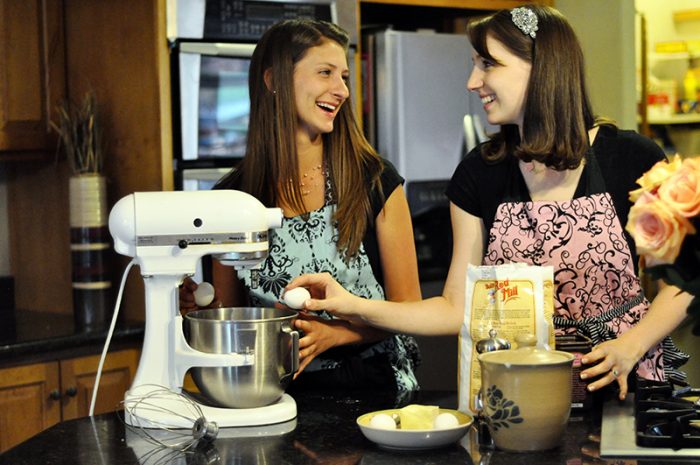
The goal isn’t perfection: The goal is a home that nurtures hearts
I want to be careful here, because whenever we talk about peaceful homes, it can sound like I’m describing a quiet, angelic household where children never argue and moms never lose patience. That’s not real life.
I have eight kids. We homeschool. We are together a lot. My home is not peaceful all the time. We have days where I think, It is disgusting in here, and we have days where we have to stop and address attitudes, kindness, tone, how we speak to one another. There are big feelings, real conflicts, and regular opportunities for sanctification.
So when I say homemaking is about creating peace, I don’t mean creating a fake version of peace. I mean pursuing the kind of peace that is rooted in Christ: order where we can, gentleness where we should, repentance when we fail, and grace in the middle of it all.
And that’s why I don’t think a good homemaker can be measured by a checklist. Because faithfulness to the Lord has never been a simple checklist, either.
Still, when I boil it down, I come back to three markers that matter far more than aesthetics:
- A good homemaker keeps her eyes fixed on Christ daily.
- She intentionally sets priorities that honor God.
- And she builds a home that nurtures her family’s hearts, not just their stomachs.
That last part is where things get practical in a way we don’t always expect. Sometimes nurturing hearts means you leave the dishes for later and take a walk with your kids. Sometimes it means you do the opposite, saying no to distractions because your home needs attention and your family needs the stability of order. Wisdom is knowing which one matters today.
There is a tension we all have to learn to navigate. Some of us grew up under pressure to keep a perfect house, so we swing hard in the other direction and tell ourselves mess doesn’t matter at all. But God doesn’t call us to either extreme. He calls us to stewardship and love, with discernment.
There’s a line I’ve repeated for years because it helps me recalibrate: the home needs to be clean enough to serve the family, but not so clean that the family is serving the house.
That’s the balance. And it looks different in every household.
Proverbs 31 isn’t a checklist, it’s a portrait
Whenever homemaking comes up, Proverbs 31 comes up too, and I think it’s important to read it the right way. That passage isn’t meant to crush you under an impossible standard where every woman needs to buy a field, wake before dawn, sew clothing, and run multiple businesses while making organic bread from scratch.
It’s not a checklist; it’s a portrait.
It shows the heart of a woman who serves her household with joy, wisdom, and strength rooted in the Lord. Her work is meaningful because it’s anchored in fear of the Lord, not in human applause. And yes, her situation included resources that many of us don’t have. But what stands out is not that she had help, it’s that she was diligent, intentional, and joyful in serving the good of her household.
If your circumstances were different, your Proverbs 31 would look different too. The particulars change. The heart does not.
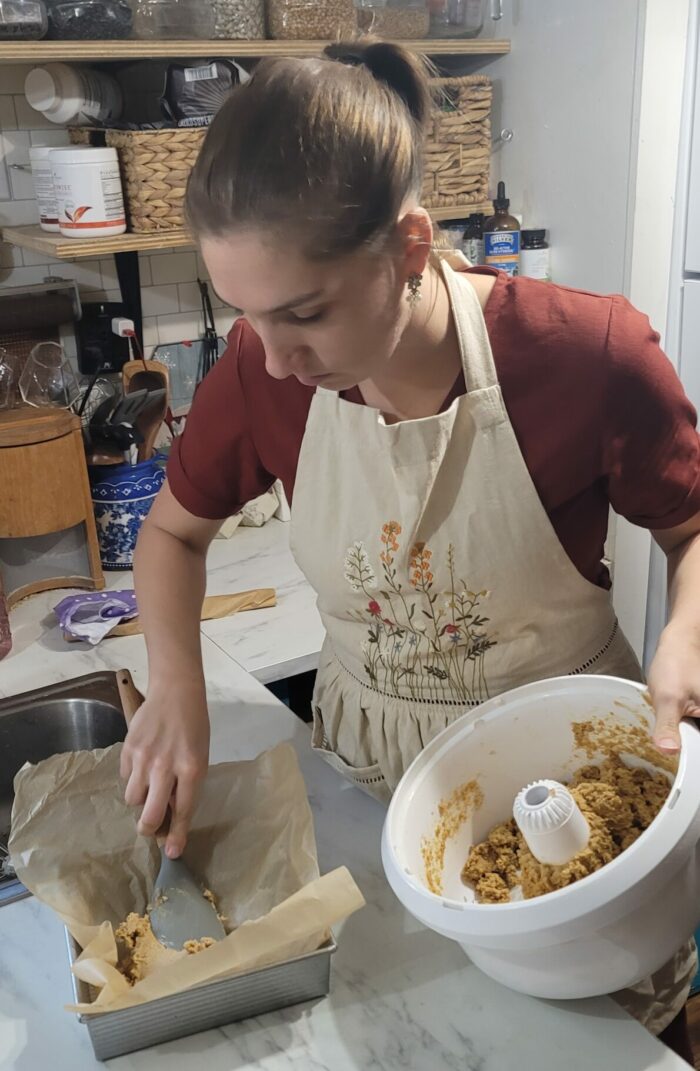
Choosing joy is not denial, it’s discipleship
One of the most honest parts of homemaking is admitting that the work is often repetitive, sometimes exhausting, and occasionally overwhelming. Even when you love your family deeply, there are weeks where you feel like you’re dragging yourself through the basics.
Recently I had a week like that. We were dealing with sickness, patience was thin, and everything felt harder than it needed to. And I realized something simple but important: I needed to choose joy on purpose.
Not the fake joy of pretending things are fine. Not the shallow joy of ignoring real problems. But the rooted joy of saying, Lord, today might be hard, but help me be faithful in it. Help me serve with gladness. Help me love the people in front of me.
I sat my kids down and told them plainly that I’d been struggling. And then I told them what we were going to do about it: we were going to choose joy, tackle our work with diligence, and move forward with a different spirit.
That’s homemaking, too.
Not just the meals and the laundry, but the spiritual tone in your home. The willingness to repent when you’ve been short-tempered. The choice to pursue peace and kindness when the easiest option would be to keep snapping and survive the day.
Homemaking is discipleship. It’s formation. It’s worship in work clothes.
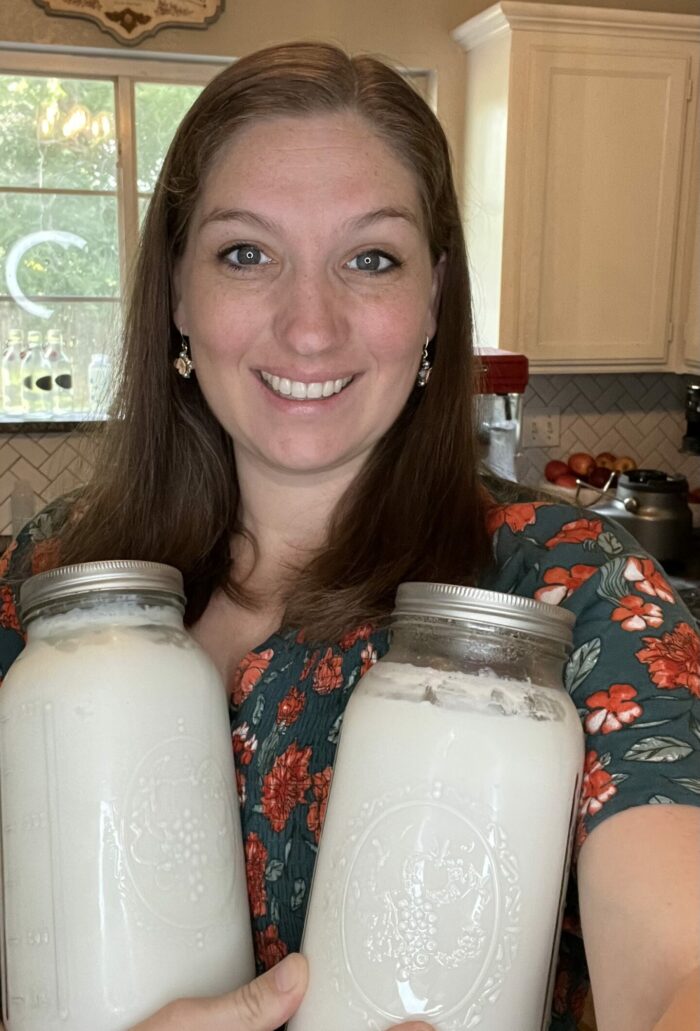
You’re not failing, you’re learning
If you hear all of this and think, Okay, but I still feel behind, let me encourage you: you are not expected to be perfect at this.
I tell my kids this all the time with school—especially math. You’re not supposed to walk into seventh grade and already know how to do everything. You’re learning. That’s the point.
And it’s the same with homemaking.
You are learning how to steward what God has given you. You are learning how to love people well. You are learning how to manage a household in your particular season. You are learning how to be joyful, how to be diligent, how to be peaceful, and how to be patient.
It’s not about perfection. It’s about progress.
There are practical skills that make homemaking easier: learning to cook, building simple cleaning rhythms, creating routines that support your days instead of fighting them. But even beneath the practical, there are deeper skills too: learning contentment, learning self-control, learning how to set priorities without guilt, and learning how to return to Christ again and again when you feel depleted.
So wherever you are right now—whether you’re in a full house, a quiet apartment, a dorm room, or a season you didn’t expect—ask the Lord the question that changes everything: What does it look like to serve You diligently today? What does it look like to love the people You’ve placed in my care? What does faithfulness look like in this season?
And then take one small step forward. That’s how homes are built. That’s how hearts are nurtured. That’s how joy grows—one ordinary day at a time.