390: What Leads to the Successful Management of Our Public Lands?
Getting Unstuck – Cultivating Curiosity
Release Date: 11/25/2025
 407: Why Might the Arts Teach the Holocaust More Powerfully Than History Alone?
Getting Unstuck – Cultivating Curiosity
Guest Karen Berman, Ph.D., Chaired the Department of Theatre and Dance at Georgia College and previously taught for 15 years at Georgetown University. She is Dean Emerita, College of Fellows of the American Theatre; Past President of the Association for Theatre in Higher Education; Director of 150 Holocaust and other theatre productions; and winner of the Georgia Governor’s Award for the Arts and the Hillel Heroes Award. Karen is co-Artistic Director of Washington Women in Theatre. She is the co-author with Dr. Gail Humphries of the two-volume work, Stories of the Holocaust: Art for Healing...
info_outline 406: "Attack!" How Do the Complexities of Character and Context Converge to Shape History?
Getting Unstuck – Cultivating Curiosity
Guest Bill Whiteside abandoned a 30-year career in software sales to devote his time to a story that he started researching to keep his mind engaged during his business travels. Intrigued by a little-known incident from early in Winston Churchill’s first term as Britain’s Prime Minister, this diversion evolved into an obsession as he dug into the story of a controversial and catastrophic clash between the British and French Navies from multiple angles. The more he learned, the more it became a book he just had to write. That book, Operation Catapult: Winston Churchill and the British...
info_outline 405: What Can Standing in Awe of the Natural World Teach Us?
Getting Unstuck – Cultivating Curiosity
Guest Tom Reed studied photography at Rutgers while studying Geography. Ansel Adams, Edgar Payne, and the Hudson River School are major influencers. Zen sensibilities profoundly influence his compositions and writings, as he is a student of Japanese martial arts and aesthetics (chado). His photographs and writing center on the experience of awe at the sight of a landscape. He hopes this leads to considering nature itself divine and sacred, and that stewardship, rather than the dominant utilitarian view, is the only sane attitude. Summary In this episode, Jeff speaks with...
info_outline 404: How Do the Experiences of War Echo Across Generations?
Getting Unstuck – Cultivating Curiosity
Guest Matthew Collins is a writer, speaker, and voice coach whose career spans British television, travel writing, prison education, and Shakespeare. A former BBC presenter, he now leads voice and public speaking workshops and teaches Shakespeare to students ranging from ex-prisoners to members of the Women's Institute. His approach is non-academic. He encourages students to explore Shakespearean texts using spoken voice exercises - and to feel the effects they can have on the mind and body. (And soul...) Matthew also gives entertaining talks. And last year, he launched...
info_outline 403: What Do Artifacts Explain About the History of the West?
Getting Unstuck – Cultivating Curiosity
Guest Paul Knowles has not followed a conventional path. Originally from Texas, he worked in Downtown Dallas as a financial advisor for the world’s largest private wealth manager. He then served as marketing director for a highly successful Colorado regional bank and later for one of the nation’s top real estate offices. However, it was after stepping away for a year and a half that Paul stumbled onto his true calling, and for the past ten years, he has been the Assistant Director of the Museum of Northwest Colorado, located in Craig, Colorado Summary In this episode, I visit with Paul to...
info_outline 402: How Does Animal-Assisted Education Improve Student Focus and Mental Health?
Getting Unstuck – Cultivating Curiosity
Guest Barbara Vokatis is a professor at the State University of New York an Oneonta, keynote speaker, award-winning author, and therapy dog partner. She is an author of books in dog therapy in educational settings (“Teachers and Therapy Dog Teams: Innovative Collaborations to Make a Difference for Children”) and a children’s book (“Carmel Goes to School”) with the therapy dog theme. Her latest book is titled “Unshakable: Parenting through Autism with Love, Courage, and Purpose.” Summary In this episode, Jeff Ikler speaks with Dr. Barb Vokatis about the role of animal-assisted...
info_outline 401: How Do Writer Friendships Make the Creative Journey More Sustainable?
Getting Unstuck – Cultivating Curiosity
Guest Hurley Winkler is a writer and editor from Jacksonville, FL. Her newsletter, “Lonely Victories,” is among the top Substack publications in the Literature category. She teaches creative writing at Flagler College. Summary In this episode, I speak with writer and teacher Hurley Winkler about journaling, creative practice, and building a sustainable writing life. Hurley traces her path to writing back to childhood anxiety and early journaling inspired by Harriet the Spy, and describes how writing eventually became her preferred independent art form after early interests in...
info_outline 400: How Do Observing and Deep Listening Help Shape Strong Writing?
Getting Unstuck – Cultivating Curiosity
Guest Heather Lende is the author of four books centered on her life in Haines, Alaska: If You Lived Here, I’d Know Your Name, Take Good Care of the Garden and the Dogs, Find the Good: Life Lessons from a Small-town Obituary Writer, and, most recently, Of Bears and Ballots, about her adventures in local politics. Heather served as Alaska Writer Laureate from 2021-2023, has an honorary Ph.D in Humane Letters from the University of Alaska, Anchorage, and is the recipient of the Middlebury College Alumni Award. Summary In this, my 400th episode, I sit down with writer Heather Lende...
info_outline 399: Why Do Public Lands Remain a Source of Controversy?
Getting Unstuck – Cultivating Curiosity
Guest Adam Bronstein grew up exploring the Adirondack Mountains of upstate New York and knew from a young age that he wanted to work to protect wild places. He received a BS from SUNY College of Environmental Science & Forestry in Environmental Studies and Geographic Information Technologies. Adam first joined the Western Watershed Project staff in 2020. Outside his capacity at WWP, Adam hosts and produces Our Public Lands podcast, advocates for Wilderness, and is a dedicated public lands hunter and angler—always looking for that elusive cow-free habitat. Summary In...
info_outline 398: Why Do Internal Customers Matter as Much as External Ones?
Getting Unstuck – Cultivating Curiosity
Guest April Obersteller is a people-centered leader, operator, and founder of And Not Or, a community and leadership platform built around the belief that we don’t have to choose. She has led customer and employee experience across iconic consumer brands, including YETI and woom, and now leads community and experience at Recess. April also hosts The AND Podcast, where she shares real conversations about leadership, growth, and humanity. Summary In this episode, Jeff talks with April Obersteller, co-founder and CEO of And, about what it really takes to build companies that succeed by...
info_outlineGuest
Hunter Seim is a thirty-year veteran of the Bureau of Land Management. His current role is a range and wild horse advisor to the District Manager of the Northwest District, Colorado BLM. During his career, he worked as a land survey technician and an outdoor recreation planner specializing in wilderness management in Palm Springs, California, and as a rangeland management specialist and an assistant field manager in Craig, Colorado. His duties have given him exposure to almost every aspect of managing public lands.
He received a Bachelor of Science in Range Management from Texas Tech University in 1992. Range management and rangeland ecology are my primary background and where the bulk of my career and professional interests lie.
Summary
Hunter Seim brings three decades of experience from the Bureau of Land Management to this conversation about managing America's public lands. With a background in range management and ecology, Hunter explains how the BLM oversees 245 million acres across the western states, balancing diverse and often conflicting interests—from wilderness preservation to resource extraction, livestock grazing, and wildlife habitat protection.
The discussion reveals the BLM's unique challenge: its mission is so broad that "somebody's always going to be disappointed." Hunter describes managing everything from wilderness boundaries in California to oil and gas reclamation in Colorado, emphasizing that collaboration is essential to success. Rather than dictating policy, the BLM works as a neighbor to thousands of private landowners, state agencies, and various other stakeholders.
Particularly fascinating is Hunter's work with outcome-based grazing, which demonstrates how properly managed livestock grazing can coexist with—and even benefit—sensitive habitats, such as sage grouse environments. The wild horse program presents one of the agency's most emotionally charged challenges, as the BLM attempts to balance animal welfare with ecosystem health while facing intense public scrutiny amplified by social media.
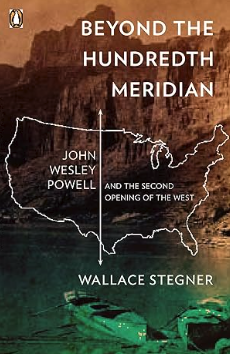
From fire management to water rights, mineral extraction to animal crossings, the BLM operates at the intersection of conservation and commerce. Hunter emphasizes that these public lands benefit all Americans, whether they ever visit them or not—from the resources they provide to the simple knowledge that vast, undeveloped wilderness still exists. His recommended reading, Wallace Stegner's "Beyond the 100th Meridian," captures the essential challenge of managing the arid West.
The Essential Point
The most critical insight is that successful public lands management requires constant collaboration and a balancing act between competing interests. The BLM cannot simply dictate policy—it must work as a neighbor with thousands of stakeholders, from ranchers to environmentalists, state agencies to private landowners. This collaborative approach, exemplified by outcome-based grazing initiatives that benefit both livestock operators and wildlife habitat, demonstrates that conservation and commerce need not be mutually exclusive.