

Show 1456: Beyond the Label: The Transformative Power of Diagnosis
Release Date: 12/20/2025
 Show 1483: Plant Power: Feed Your Gut and Fight Inflammation
The People's Pharmacy Podcast
When you decide to grab a bite to eat, do you think about how to feed your gut microbes? Most of us don’t. Even if we did, their only means of stating their preferences is somewhat after the fact. Do you end up feeling less than well? Perhaps the denizens of your gut aren’t happy. In this episode, we consider how to support your microbiota and whether that can reduce the inflammation that seems to accompany modern life. At The People’s Pharmacy, we strive to bring you up‑to‑date, rigorously researched insights and conversations about health, medicine, wellness and health...
info_outline Show 1482: Are Your Kidneys in Trouble? Two Tests Could Tell You
The People's Pharmacy Podcast
Our kidneys do an incredible job filtering our blood every hour of every day. Most of us have two kidneys, and each one has about a million microscopic filters called glomeruli. Unlike the filters in our HVAC system, though, these filters cannot be replaced. But they do their work so well and unobtrusively that most of us don’t even think about our kidney function. Although 37 million Americans have kidney trouble, the majority are unaware of their situation. Two tests could reveal how well the kidneys are working. What are they, and how often should you ask about them? At The...
info_outline Show 1481: Flip-Flops, Fungus and Foot Pain: What Are Your Feet Trying to Tell You?
The People's Pharmacy Podcast
Millions of people suffer with foot trouble. Some have heel pain when they first get out of bed. Others complain of flat feet or bunions. Athlete’s foot is very common, though it doesn’t always respond as expected to antifungal medications. Speaking of fungus, toenail fungus can be extremely stubborn. What are your feet trying to tell you about what they need? How can you keep them healthy, especially in the summertime? At The People’s Pharmacy, we strive to bring you up to date, rigorously researched insights and conversations about health, medicine, wellness and health...
info_outline Show 1446: The Science of Strong Bones: Lifestyle, Medication and Movement (Archive)
The People's Pharmacy Podcast
Are you concerned about your bone health? Do you worry about osteoporosis? According to the CDC, more than 10 million Americans have low bone density that makes them more vulnerable to fractures. For many older people, a fracture can be devastating, reducing mobility and possibly even leading to death. What does the latest medical science tell us about how you can maintain strong bones? At The People’s Pharmacy, we strive to bring you up‑to‑date, rigorously researched insights and conversations about health, medicine, wellness and health policies and health systems. While these...
info_outline Show 1480: The Sleep Reset: How to Fall Asleep and Stay Asleep
The People's Pharmacy Podcast
Do you have trouble sleeping? An occasional late night or early morning is probably not dangerous, but too many people get too little sleep on a regular basis. How does that affect their health? Even more importantly, what can they do to change the situation? You’ll want to listen to find out if you need a sleep reset. At The People’s Pharmacy, we strive to bring you up to date, rigorously researched insights and conversations about health, medicine, wellness and health policies and health systems. While these conversations intend to offer insight and perspective, the content...
info_outline Show 1479: Must You Shun the Sun to Save Your Skin?
The People's Pharmacy Podcast
When sunny summer days come around, it makes some dermatologists shudder. They would prefer we behave like bats and hide in caves until nightfall. Failing that, they stress the importance of always applying (and re-applying) high SPF sunscreen, wearing sun-blocking clothing with long sleeves and keeping a big-brimmed hat firmly on the head. A beekeeper’s outfit might be perfect. But must you really shun the sun completely to save your skin? Our guest describes how to practice moderation safely. He also explains why some people are addicted to sunshine, while others are allergic to it....
info_outline Show 1412: Beyond Amyloid: The Science That Could Change the Course of Alzheimer Disease (Archive)
The People's Pharmacy Podcast
This week, we look at the new pharmaceuticals that the FDA has approved for treating Alzheimer disease. Although they are effective at removing amyloid plaques from the brain, they don’t seem to help patients function better. Is it time to turn away from an exclusive focus on amyloid to consider other factors that might affect cognitive decline and change the course of Alzheimer disease? At The People’s Pharmacy, we strive to bring you up to date, rigorously researched insights and conversations about health, medicine, wellness and health policies and health systems. While these...
info_outline Show 1478: The Outdoor Prescription for Fighting Dementia, Depression and Heart Disease
The People's Pharmacy Podcast
Too many of us are spending our days staring at screens. Little screens on our phones, big screens on the television, medium-size screens on our computers at work. Our modern lifestyles mean that we spend the vast majority of our time indoors–93%, on average. What is the time inside doing to our health? Is there an outdoor prescription to reverse dementia and depression? At The People’s Pharmacy, we strive to bring you up to date, rigorously researched insights and conversations about health, medicine, wellness and health policies and health systems. While these conversations...
info_outline Show 1477: Answering Your Questions About Vision Problems
The People's Pharmacy Podcast
Humans have five senses, but for most of us, sight dominates. That’s why vision problems are so distressing. Have you been dealing with difficulties with your eyes? During this broadcast episode, our guest expert is ready to answer your questions about vision problems. At The People’s Pharmacy, we strive to bring you up to date, rigorously researched insights and conversations about health, medicine, wellness and health policies and health systems. While these conversations intend to offer insight and perspective, the content is provided solely for informational and educational purposes....
info_outline Show 1476: Tell Me Where It Hurts: A Roadmap for Managing Chronic Pain
The People's Pharmacy Podcast
Pain is an important warning signal, helping you protect your body from damage. That’s why we can view acute pain as an asset. Chronic pain, though, can be debilitating. In this episode, a pain psychologist offers a roadmap for managing chronic pain. At The People’s Pharmacy, we strive to bring you up to date, rigorously researched insights and conversations about health, medicine, wellness and health policies and health systems. While these conversations intend to offer insight and perspective, the content is provided solely for informational and educational purposes. Please...
info_outlineDo you know someone who has struggled for years to meet deadlines or manage their time? Perhaps you have a smart friend who just never did well in school (or possibly at work) because they couldn’t seem to turn papers (or reports) in on time. Such people might find a diagnosis of attention deficit hyperactivity is a relief. Could it free them to find new and hopeful ways to cope with challenges? In this episode, we explore the transformative power of diagnosis.
At The People’s Pharmacy, we strive to bring you up to date, rigorously researched insights and conversations about health, medicine, wellness and health policies and health systems. While these conversations intend to offer insight and perspective, the content is provided solely for informational and educational purposes. Please consult your healthcare provider before making any changes to your medical care or treatment.
The Transformative Power of Diagnosis:
Our first interview on this topic is with psychiatrist Awais Aftab. Dr. Aftab has written about “the Rumpelstiltskin effect,” so we asked him to explain it to us (BJPsych Bulletin, Aug. 22, 2025). He describes the relief and even therapeutic effect some people experience when their symptoms can be categorized by a diagnosis rather than as a character defect. This Rumpelstiltskin effect can be found in the folktales of a wide range of cultures as well as science fiction and fantasy. The idea that esoteric knowledge, even if it is only a name, can help offer a measure of control exemplifies the transformative power of diagnosis. The ritual of receiving a diagnosis may also give people relief from cognitive ambiguity.
Some people find that a clinical diagnosis offers validation of their lived experience. In addition, getting a diagnosis may give them an avenue to connecting with others whose experience may be similar. Supportive communities have grown up around the diagnoses of autism spectrum disorder or Asberger’s syndrome. Dr. Aftab views the transformative power of diagnosis alone, regardless of any treatment available, as similar to the power of placebo.
Potential Downsides of a Diagnosis:
Just as a placebo may relieve symptoms and also cause side effects, the transformative power of a diagnosis may sometimes work against a person. If the patient getting the diagnosis finds that it helps clarify new steps toward managing his or her discomfort, it is a benefit. But if instead it becomes an invitation to succumb to symptoms, then it could be harmful. Stepping into the sick role can become maladaptive.
A Second View:
We discussed this idea with another psychiatrist, Dr. Robert Waldinger. He pointed out that a person’s previous experience and their family’s expectations could have a significant impact on whether the transformative power of diagnosis works for good or for ill. One example might be hypertension. One person receiving that diagnosis might remember that his father had hypertension and took his blood pressure medicine conscientiously and lived to a ripe old age. Another person might get the same diagnosis and freak out because a grandfather with hypertension died of a stroke.
Helping People Manage without a Diagnosis:
When life is hard, people may become anxious or despondent without a clinical mental disorder. They still need support. How can we help people talk about their uncomfortable feelings? Even mental health professionals may need practice to feel comfortable actually talking about a person’s authentic feelings. They may be frightened that the person will reveal despair that they don’t know how to alleviate.
Dr. Waldinger reminds us that we don’t have to fix another person’s feelings, but truly listening can itself help. Authentic communication is the heart of connection. As with the transformative power of diagnosis, simply being heard and acknowledged may make a person feel better. Dr. Waldinger is fond of this quote: “Attention is the most basic form of love.” Relationships can help us in hard times. They also bring us joy.
We also remind listeners of the crisis hotline 988 for those who are considering suicide.
This Week's Guests:
M. Awais Aftab, MD is a Clinical Associate Professor of Psychiatry at Case Western Reserve University.
Psychiatry at the Margins is Dr. Aftab’s Substack newsletter about exploring critical, philosophical, and scientific debates in psychiatric practice and the scientific study of psychology.
[caption id="attachment_138067" align="alignnone" width="768"] Dr. Awais Aftab, Case Western Reserve University[/caption]
Robert Waldinger, MD, is a professor of psychiatry at Harvard Medical School, director of the Harvard Study of Adult Development at Massachusetts General Hospital, and cofounder of the Lifespan Research Foundation. Along with being a practicing psychiatrist and psychoanalyst, Dr. Waldinger is also a Zen master (Roshi) and teaches meditation in New England and around the world. Dr. Waldinger, with co-author Marc Schulz, PhD, is the author of The Good Life: Lessons From the World’s Longest Scientific Study on Happiness.
The People’s Pharmacy is reader supported. When you buy through links in this post, we may earn a small affiliate commission (at no cost to you).
[caption id="attachment_125867" align="alignnone" width="768"]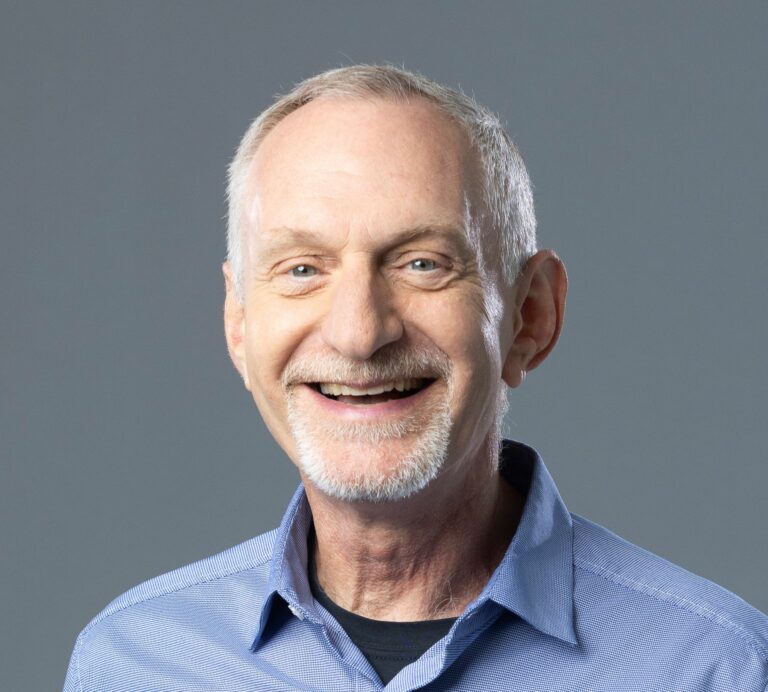 Robert Waldinger, MD, author of The Good Life[/caption]
Listen to the Podcast:
The podcast of this program will be available Monday, Dec. 22, 2025, after broadcast on Dec. 20. You can stream the show from this site and download the podcast for free. In this week’s episode, Joe describes his experience with aphantasia and his relief at discovering there is a name for it.
In the podcast, Dr. Waldinger discusses gratitude and how we can cultivate it, when it seems so easy to fall back on anger. One approach is the subtraction idea: we may feel irritated with our partner because of the way they load the dishwasher. But when we imagine what it would be like without them, we can experience gratitude that they are in our lives. We also consider the pain of estrangement and the difficulty of rebuilding relationships. Dr. Waldinger shares his personal story of estrangement and how it feels to make peace at last.