

Show 1458: Psychotherapy on Your Phone: Can AI Fill the Therapy Gap?
Release Date: 01/17/2026
 Show 1428: The Hidden Power of the Unconscious Brain (Archive)
The People's Pharmacy Podcast
In this episode, a renowned neurosurgeon shares what he has learned in decades of working to restore ailing brains. His new book covers a vast range of neuroscience. Our dilemma was what to pay attention to in all those options. In a sense, that is always the human situation. We are capable of conscious processing of approximately 200 bits per second (bps) of information. Our unconscious brain deals with as much as 11 million bps. At The People’s Pharmacy, we strive to bring you up to date, rigorously researched insights and conversations about health, medicine, wellness and...
info_outline Show 1472: Beyond Lyme: Stealth Infections from Flea and Tick Bites
The People's Pharmacy Podcast
Tick season is well underway in many parts of the country. It seems that a mild winter and a warm spring have brought the nymphs out seeking blood. If that blood is yours, you may be exposed to a range of pathogens. What’s more, ticks are not the only creatures ready to bite you. Fleas are an even bigger problem when it comes to transmitting bacteria called Bartonella. That genus is responsible for cat scratch disease and trench fever. When the infection goes chronic, it’s called bartonellosis. What are the dangers of flea and tick bites? At The People’s Pharmacy, we...
info_outline Show 1471: Broken Bills: Why Americans Pay Twice as Much for Less Care
The People's Pharmacy Podcast
Americans often boast of having the best health care in the world. It is certainly the most expensive health care. We pay twice as much as people in many other industrialized nations. Are we getting our money’s worth? Some population statistics, such as life expectancy, suggest we could be doing much better. How can we make sense of the complexity of American health care? At The People’s Pharmacy, we strive to bring you up to date, rigorously researched insights and conversations about health, medicine, wellness and health policies and health systems. While these conversations intend to...
info_outline Show 1470: Why Your Doctor Should Prescribe Exercise to Treat Depression, Cancer & Aging
The People's Pharmacy Podcast
If you had to name one thing that could contribute to better health throughout the lifespan, what would it be? We think exercise, or at least physical activity deserves the top spot. Yet in 2025, fewer than half of adults met the guidelines for aerobic physical activity. And less than one-quarter were doing both aerobic and muscle-strengthening exercises on a regular basis. Perhaps your doctor should prescribe exercise. What could we expect as the benefits? At The People’s Pharmacy, we strive to bring you up to date, rigorously researched insights and conversations about health,...
info_outline Show 1469: Fresh Air & Sunlight: How Some Hospitals Are Rediscovering This Healing Secret
The People's Pharmacy Podcast
Hospitals can be pretty overwhelming. Sometimes you may feel like you need a map to find your way around the maze, not to mention a trusty guide to get you to the department or health professional that could actually help you overcome illness. In addition, being hospitalized often means being deprived of fresh air & sunlight. Could that be a mistake for proper healing? At The People’s Pharmacy, we strive to bring you up to date, rigorously researched insights and conversations about health, medicine, wellness and health policies and health systems. While these conversations...
info_outline Show 1468: Healing Joints and Nerves: The New Science of Regenerative Therapies
The People's Pharmacy Podcast
Millions of Americans are in pain. Arthritic joints make exercise difficult, even though moving is one of the best things we can do for joint pain. Pinched nerves can cause excruciating, long-lasting pain. The usual treatments, such as NSAIDs, may help ease the pain momentarily, but do nothing to help heal the underlying condition. What do you know about the new science of regenerative therapies? At The People’s Pharmacy, we strive to bring you up‑to‑date, rigorously researched insights and conversations about health, medicine, wellness and health policies and health systems....
info_outline Show 1429: How to Love Your Liver and Protect its Superpowers (Archive)
The People's Pharmacy Podcast
This week, Joe and Terry discuss liver health with two specialists. You may not have spent much time thinking about your liver. It is, however, an absolutely essential organ. When the liver is working properly, every part of the body gets the nutrients it needs and no parts are exposed to damaging toxins. These are among its superpowers. Find out why you should love your liver. At The People’s Pharmacy, we strive to bring you up to date, rigorously researched insights and conversations about health, medicine, wellness and health policies and health systems. While these...
info_outline Show 1467: Can You Disagree Without Fighting? Building Bridges, Not Battles!
The People's Pharmacy Podcast
A chance encounter with a stranger on an airplane offers lessons for all of us in how to disagree without fighting. Infectious disease expert Morgan Goheen, MD, was wary when the person in the seat next to hers struck up a conversation with questions about the origins of Lyme disease and the value of being vaccinated against COVID. His views were quite different from hers. Yet they managed, in the course of the flight, to exchange perspectives in a respectful manner. Can we all learn how to do that? At The People’s Pharmacy, we strive to bring you up to date, rigorously...
info_outline Show 1466: Could Hidden Infections Be Driving Chronic Disease?
The People's Pharmacy Podcast
Chronic diseases make up the bulk of the problems that modern health care must address. Each condition seems to have its own drivers–cholesterol for heart disease, airway hyperreactivity for asthma, neurotransmitter imbalance for depression and other psychiatric disorders, a buildup of amyloid beta in the brain for Alzheimer disease. What if all these conditions had similar origins? Today we’ll consider the evidence suggesting that hidden infections may be driving many chronic diseases. At The People’s Pharmacy, we strive to bring you up to date, rigorously researched...
info_outline Show 1465: Food Fight! Should We Flip the Food Pyramid Upside-Down?
The People's Pharmacy Podcast
Every five years, the Departments of Agriculture and of Health and Human Services jointly issue guidelines on what we should eat. The most recent Dietary Guidelines for Americans (2025-2030) have been controversial. [Here is a link: https://www.dietaryguidelines.gov] Among other things, the administration decided to flip the food pyramid upside-down in illustrating its recommendations. Why did that cause such a stir, and what will it mean for you? At The People’s Pharmacy, we strive to bring you up to date, rigorously researched insights and conversations about health, medicine,...
info_outlineMillions of people are feeling apprehensive these days. The headlines are enough to make almost anyone feel anxious. People who are distressed may have a difficult time finding a therapist, however. There are too few, and consequently many are not taking new patients. Wait lists are long, often three to six months. Therapists who are accepting patients may not take insurance, and therapy can be pricey. A single session of gold-standard cognitive behavioral therapy can cost from $100 to $250. Could AI fill the therapy gap, offering psychotherapy online?
At The People’s Pharmacy, we strive to bring you up to date, rigorously researched insights and conversations about health, medicine, wellness and health policies and health systems. While these conversations intend to offer insight and perspective, the content is provided solely for informational and educational purposes. Please consult your healthcare provider before making any changes to your medical care or treatment.
Can AI Fill the Therapy Gap?
Conversational agents like ChatGPT, Gemini or Claude have become nearly ubiquitous. People use them to help write resumes, pitch stories, create images for web or social media posts and make financial projections. Using these chatbots to give feedback as in therapy is surprisingly popular. But how well can AI fill the therapy gap, really? Today’s guest has been studying these interactions.
Chatbots as Therapists:
The conversational agents are also referred to as LLMs, for Large Language Models. It describes how they have been trained by scouring the internet. That allows them to predict the most likely word to come next in a sentence, or the probable next idea in a paragraph. They can’t actually think, but if something has been posted online, they have access to it. At this point, the technology has become so refined that chatbots easily pass the Turing test; it is difficult to reliably distinguish AI from human responses.
There are advantages to having “someone to talk to” any time, any place. Younger people in particular are digital natives and often feel more comfortable with technology than face-to-face with a human.
What Are the Downsides of Having AI Fill the Therapy Gap?
The training of AI agents as therapists, though, gives rise to some serious flaws. Because they are trained to elicit positive responses from humans to keep people engaged, they have a sycophancy bias. Have you noticed that most messages start by telling you your idea is great? That makes you feel good, and you are less likely to quit the conversation. But it isn’t necessarily how therapy is supposed to work. If people are not challenged when appropriate, they may get stuck and not make any progress toward healthier attitudes or behaviors. They may fail to develop the critical skill of stress tolerance. In addition, chatbots are disconnected from reality. This could become a serious problem if a user starts to become delusional or is in an acute crisis.
Anxiety as a Habit:
Dr. Brewer suggests that we would do well to think of anxiety as a habit. He credits a 1985 paper by an investigator named Tom Borkovec suggesting that worry drives anxiety rather than being a mere symptom of anxiety. Worrying leads people to dwell on possible catastrophic outcomes, which understandably makes them more anxious. Treating anxiety as a habit, especially by finding a better reward than the illusion of control offered by worrying, could be effective. Responding with curiosity and kindness might offer a better outcome. He has studied this possibility. When you treat anxiety as a habit that can be changed, anxiety scores decline by 67%. That is quite impressive.
Using Chatbots to Kick the Worry Habit Could Help AI Fill the Therapy Gap:
One way to use AI effectively is to train conversational agents specifically to monitor for safety in other human-chatbot interactions. Given clear rules, they can do this very well. Also, chatbots could be used not so much as teaching assistants but as learning assistants. They could help people who are striving to change their anxiety habit. This might be integrated with video tutorials from an expert human, such as Dr. Brewer or one of his colleagues. They are testing this approach currently. Hopefully, it will prove more effective than the 20% response rate to SSRI medication for anxiety.
This Week’s Guest:
Jud Brewer, MD, PhD, is an internationally renowned addiction psychiatrist and neuroscientist. He is a professor in the School of Public Health and Medical School at Brown University. His 2016 TED Talk, “A Simple Way to Break a Bad Habit,” has been viewed more than 20 million times. He has trained Olympic athletes and coaches, government ministers, and business leaders. Dr. Brewer is the author of The Craving Mind: from cigarettes to smartphones to love, why we get hooked and how we can break bad habits, the New York Times best-seller, Unwinding Anxiety: New Science Shows How to Break the Cycles of Worry and Fear to Heal Your Mind, and his latest book is The Hunger Habit: Why We Eat When We’re Not Hungry and How to Stop.
You can find more information on the skills-based program for anxiety that Dr. Brewer developed at www.goingbeyondanxiety.com
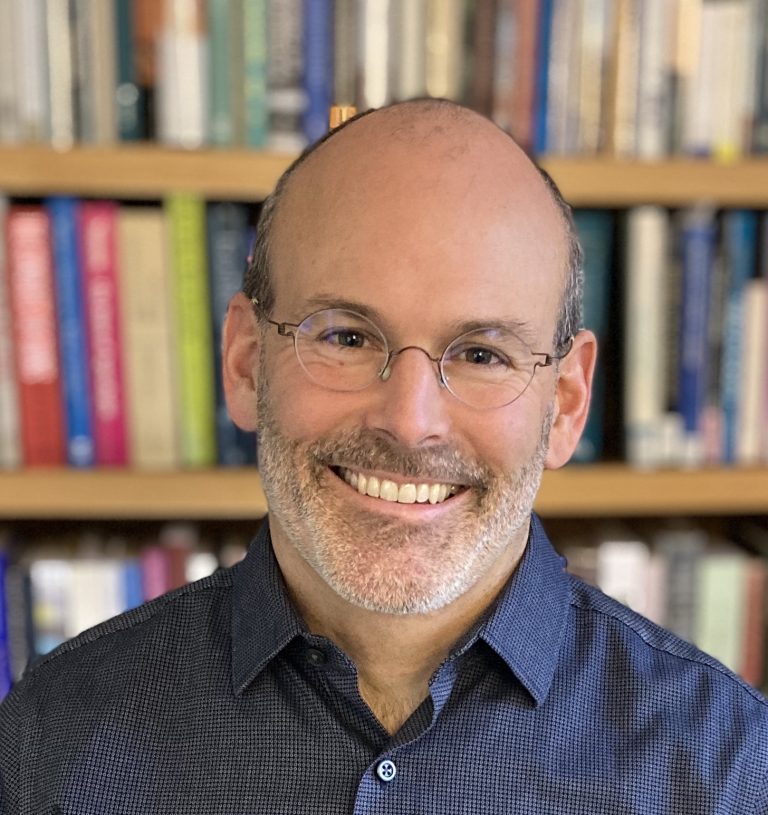
Judson Brewer, MD, PhD, Brown University, author of Unwinding Anxiety
The People’s Pharmacy is reader supported. When you buy through links in this post, we may earn a small affiliate commission (at no cost to you).