

Show 1470: Why Your Doctor Should Prescribe Exercise to Treat Depression, Cancer & Aging
Release Date: 04/25/2026
 Show 1483: Plant Power: Feed Your Gut and Fight Inflammation
The People's Pharmacy Podcast
When you decide to grab a bite to eat, do you think about how to feed your gut microbes? Most of us don’t. Even if we did, their only means of stating their preferences is somewhat after the fact. Do you end up feeling less than well? Perhaps the denizens of your gut aren’t happy. In this episode, we consider how to support your microbiota and whether that can reduce the inflammation that seems to accompany modern life. At The People’s Pharmacy, we strive to bring you up‑to‑date, rigorously researched insights and conversations about health, medicine, wellness and health...
info_outline Show 1482: Are Your Kidneys in Trouble? Two Tests Could Tell You
The People's Pharmacy Podcast
Our kidneys do an incredible job filtering our blood every hour of every day. Most of us have two kidneys, and each one has about a million microscopic filters called glomeruli. Unlike the filters in our HVAC system, though, these filters cannot be replaced. But they do their work so well and unobtrusively that most of us don’t even think about our kidney function. Although 37 million Americans have kidney trouble, the majority are unaware of their situation. Two tests could reveal how well the kidneys are working. What are they, and how often should you ask about them? At The...
info_outline Show 1481: Flip-Flops, Fungus and Foot Pain: What Are Your Feet Trying to Tell You?
The People's Pharmacy Podcast
Millions of people suffer with foot trouble. Some have heel pain when they first get out of bed. Others complain of flat feet or bunions. Athlete’s foot is very common, though it doesn’t always respond as expected to antifungal medications. Speaking of fungus, toenail fungus can be extremely stubborn. What are your feet trying to tell you about what they need? How can you keep them healthy, especially in the summertime? At The People’s Pharmacy, we strive to bring you up to date, rigorously researched insights and conversations about health, medicine, wellness and health...
info_outline Show 1446: The Science of Strong Bones: Lifestyle, Medication and Movement (Archive)
The People's Pharmacy Podcast
Are you concerned about your bone health? Do you worry about osteoporosis? According to the CDC, more than 10 million Americans have low bone density that makes them more vulnerable to fractures. For many older people, a fracture can be devastating, reducing mobility and possibly even leading to death. What does the latest medical science tell us about how you can maintain strong bones? At The People’s Pharmacy, we strive to bring you up‑to‑date, rigorously researched insights and conversations about health, medicine, wellness and health policies and health systems. While these...
info_outline Show 1480: The Sleep Reset: How to Fall Asleep and Stay Asleep
The People's Pharmacy Podcast
Do you have trouble sleeping? An occasional late night or early morning is probably not dangerous, but too many people get too little sleep on a regular basis. How does that affect their health? Even more importantly, what can they do to change the situation? You’ll want to listen to find out if you need a sleep reset. At The People’s Pharmacy, we strive to bring you up to date, rigorously researched insights and conversations about health, medicine, wellness and health policies and health systems. While these conversations intend to offer insight and perspective, the content...
info_outline Show 1479: Must You Shun the Sun to Save Your Skin?
The People's Pharmacy Podcast
When sunny summer days come around, it makes some dermatologists shudder. They would prefer we behave like bats and hide in caves until nightfall. Failing that, they stress the importance of always applying (and re-applying) high SPF sunscreen, wearing sun-blocking clothing with long sleeves and keeping a big-brimmed hat firmly on the head. A beekeeper’s outfit might be perfect. But must you really shun the sun completely to save your skin? Our guest describes how to practice moderation safely. He also explains why some people are addicted to sunshine, while others are allergic to it....
info_outline Show 1412: Beyond Amyloid: The Science That Could Change the Course of Alzheimer Disease (Archive)
The People's Pharmacy Podcast
This week, we look at the new pharmaceuticals that the FDA has approved for treating Alzheimer disease. Although they are effective at removing amyloid plaques from the brain, they don’t seem to help patients function better. Is it time to turn away from an exclusive focus on amyloid to consider other factors that might affect cognitive decline and change the course of Alzheimer disease? At The People’s Pharmacy, we strive to bring you up to date, rigorously researched insights and conversations about health, medicine, wellness and health policies and health systems. While these...
info_outline Show 1478: The Outdoor Prescription for Fighting Dementia, Depression and Heart Disease
The People's Pharmacy Podcast
Too many of us are spending our days staring at screens. Little screens on our phones, big screens on the television, medium-size screens on our computers at work. Our modern lifestyles mean that we spend the vast majority of our time indoors–93%, on average. What is the time inside doing to our health? Is there an outdoor prescription to reverse dementia and depression? At The People’s Pharmacy, we strive to bring you up to date, rigorously researched insights and conversations about health, medicine, wellness and health policies and health systems. While these conversations...
info_outline Show 1477: Answering Your Questions About Vision Problems
The People's Pharmacy Podcast
Humans have five senses, but for most of us, sight dominates. That’s why vision problems are so distressing. Have you been dealing with difficulties with your eyes? During this broadcast episode, our guest expert is ready to answer your questions about vision problems. At The People’s Pharmacy, we strive to bring you up to date, rigorously researched insights and conversations about health, medicine, wellness and health policies and health systems. While these conversations intend to offer insight and perspective, the content is provided solely for informational and educational purposes....
info_outline Show 1476: Tell Me Where It Hurts: A Roadmap for Managing Chronic Pain
The People's Pharmacy Podcast
Pain is an important warning signal, helping you protect your body from damage. That’s why we can view acute pain as an asset. Chronic pain, though, can be debilitating. In this episode, a pain psychologist offers a roadmap for managing chronic pain. At The People’s Pharmacy, we strive to bring you up to date, rigorously researched insights and conversations about health, medicine, wellness and health policies and health systems. While these conversations intend to offer insight and perspective, the content is provided solely for informational and educational purposes. Please...
info_outlineIf you had to name one thing that could contribute to better health throughout the lifespan, what would it be? We think exercise, or at least physical activity deserves the top spot. Yet in 2025, fewer than half of adults met the guidelines for aerobic physical activity. And less than one-quarter were doing both aerobic and muscle-strengthening exercises on a regular basis. Perhaps your doctor should prescribe exercise. What could we expect as the benefits?
At The People’s Pharmacy, we strive to bring you up to date, rigorously researched insights and conversations about health, medicine, wellness and health policies and health systems. While these conversations intend to offer insight and perspective, the content is provided solely for informational and educational purposes. Please consult your healthcare provider before making any changes to your medical care or treatment.
Would Your Doctor Prescribe Exercise for Depression?
Earlier this year, the Cochrane Collaboration published a review of 73 randomized clinical trials of exercise as a treatment for depression (Cochrane Database of Systematic Reviews, Jan. 8, 2026). Most of these compared physical activity to antidepressants or to psychological therapy for depressed patients. Some of them compared the exercise prescription to no treatment or wait list.
Comparing exercise to no treatment revealed an advantage for exercise, although the quality of the trials left something to be desired. Ten trials compared exercise to psychological therapy. In addition, five trials weighed exercise against antidepressant medication. Neither comparison showed a clear tilt for or against exercise as a superior intervention against depression.
Exercise in the Cancer Center
Dr. Claudio Battaglini of the University of North Carolina at Chapel Hill was not surprised by this finding. The exercise program he oversees for cancer patients often results in lifting their spirits as well as improving their health. That may help explain the very high adherence in his program.
Will Physical Activity Reduce the Risk of Cancer?
According to a review of the evidence, regular physical activity can reduce the number of people who die prematurely. In addition, it helps with weight control, quality of life and bone health. Older people are less likely to fall or experience declining cognition if they exercise regularly. The review found that physical activity improves quality of life and promotes emotional benefits (European Journal of Cancer Prevention, Jan. 1, 2025).
If oncologists should prescribe exercise, don’t cancer patients deserve to have their insurance company cover the cost? Insurers rarely blink twice at cardiac rehab. Although cancer rehab is also super-helpful, insurance companies often don’t choose to pay for it.
What Role Could Coaching Play in Guiding Physical Activity?
Lots of doctors tell their patients to get more exercise. The patient wants to and intends to, but perhaps they just don’t know how. What activity should they choose? What is the proper technique? How often and how much do you need to move? All these questions can be answered by a coach. The coach will take into account your objectives and preferences as well as your prior experience. What do you love doing? Are there any moves you should avoid to reduce the risk of injury? That’s why when doctors prescribe exercise, they should include coaching to provide this sort of guidance.
If Doctors Prescribe Exercise, Will That Help Motivation?
Many of us know we should be active, but we don’t always follow through. How can we get motivated to move? According to Dr. Jordan Metzl, the first step is to find something you love doing. For Joe, for instance, having the doctor prescribe exercise of runniing a mile a day is not going to work. But he’ll cover much more than a mile–and quickly–if he is playing a competitive game of tennis. Joe loves tennis.
Terry is not a runner either. On the other hand, karate club is a highlight of her week, and she has worked to achieve some skill in it. Dr. Metzl advocates for finding the activity that gets you excited and making it a priority in your life. If you are having fun, that is a great motivation.
Reducing the Cost to Act
Another thing to consider is overcoming the cost to act. If your activity requires a lot of preparation that feels like a chore, the cost to act is high. If you can make it easier and break down that barrier, you are much more likely to accomplish your exercise.
External rewards can also play a role. Joe loves winning, so he likes to play with guys at about his same level of skill. That way, he has a chance to win if he tries. For Terry, there was a progression through belt levels in karate, from yellow to green to blue, and so on. Now, she looks forward to closing the rings in the fitness app on her watch.
When Doctors Prescribe Exercise, Does That Give You a Push?
For Dr. Metzl, the idea of pushing yourself and maybe your friends is a positive notion. We asked him about people who dig in their heels when pushed. What approach do they need to perceive and pursue their goals? He summarized the three ingredients of healthy motivation as knowledge, emotion and belief. That’s knowledge of the benefits of activity, an emotional response of appreciating and enjoying activity and a belief that you can achieve your goal.
This Week’s Guests
Claudio Battaglini, PhD., FACSM, is Professor in the Dept. of Exercise and Sport Science at The University of North Carolina at Chapel Hill. He is also Director Emeritus of the Get REAL & HEEL Breast Cancer Research Program and Co-Director of the Exercise Oncology Research Laboratory.

Jordan D. Metzl, MD is an internationally recognized sports medicine physician, bestselling author, and fitness instructor who practices at the Hospital for Special Surgery in New York City. He lectures around the world and founded the first physician-led online fitness community, IronStrength, with more than 50,000 members. He created the Ironstrength Workout, a functional fitness program for improved performance and injury prevention that he teaches in fitness venues throughout the country. An elite athlete himself, Dr. Metzl is also a 40-time marathon runner and 14-time Ironman finisher.
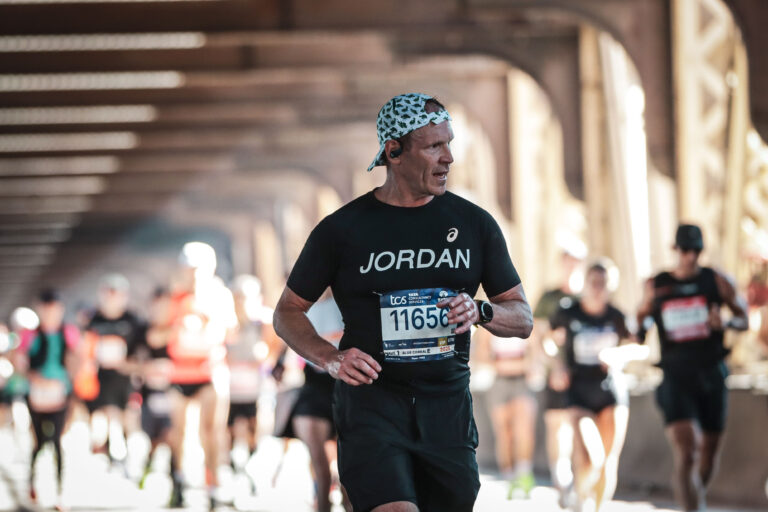
Dr. Jordan Metzl, author of Push, runs the New York City Marathon 2025
Dr.Metzl’s latest book is Push: Unlock the Science of Fitness Motivation to Embrace Health and Longevity
The People’s Pharmacy is reader supported. When you buy through links in this post, we may earn a small affiliate commission (at no cost to you).
Listen to the Podcast
The podcast of this program will be available Monday, April 27, 2026, after broadcast on April 25. On this episode, Dr. Metzl talks about the joy of teaching medical students to offer an exercise prescription and the challenge of getting specialties other than cardiology to integrate physical activity into their rehab process. Dr. Battaglini discusses the contrast between cardiac rehab, which is covered by insurance, and cancer rehab, which is not. He also describes the value of swimming, especially for older people with sore joints. Walking is good exercise and easy for most people. What if the weather is bad? Perhaps an indoor walk around the mall would be a good alternative, and if you can recruit some friends to join you, so much the better. You can stream the show from this site and download the podcast for free.
Citations
- Clegg AJ et al, "Exercise for depression." Cochrane Database of Systematic Reviews, Jan. 8, 2026. https://doi.org/10.1002/14651858.CD004366.pub7
- Albini A et al, "Physical activity and exercise health benefits: cancer prevention, interception, and survival." European Journal of Cancer Prevention, Jan. 1, 2025. DOI: 10.1097/CEJ.0000000000000898