467 From PhD to Pump Rooms: Jake Elliott on Wastewater, Efficiency, and Saying “Yes” Wisely
Release Date: 03/13/2026
 494 Preparing for AWT 2026: Leadership, Change, and CWT Growth with Matt Coffindaffer, Part 2
Scaling UP! H2O
A strong convention outcome starts before the first session and continues long after the exhibit hall closes. Association of Water Technologies Executive Director Matt Coffindaffer explains how deliberate preparation, wider professional relationships, and volunteer service can turn AWT 2026 into practical value for an industrial water treatment career or business. Find the Right Place to Volunteer AWT offers yearlong committee service, shorter task-force assignments, and opportunities across technical research, marketing, membership, regulatory affairs, business resources, young...
info_outline 493 Preparing for AWT 2026: Leadership, Change, and CWT Growth with Matt Coffindaffer, Part 1
Scaling UP! H2O
Strong professional associations do more than provide programs and credentials. They create an environment where members can exchange knowledge, build trusted relationships, and prepare their businesses for what comes next. As the Association of Water Technologies enters a new operational chapter, Executive Director explains how AWT is strengthening that environment without losing the culture that makes it distinctive. From the Arts to Association Leadership Before entering association management, Matt built a career behind the scenes in theater. His...
info_outline 492 AI for Water Treaters: A Thought Partner, Not a Replacement
Scaling UP! H2O
info_outline 491 Environmental Microbiology and Legionella: Managing Building Water Risks with Dr. Rajiv Sahay
Scaling UP! H2O
Reliable Legionella results begin long before a sample reaches the laboratory. of explains how building conditions, field collection practices, and laboratory methods influence the quality—and usefulness—of the data water professionals receive. Building Water Conditions Shape the Risk Modern buildings rely heavily on controlled mechanical systems, yet water can remain an overlooked part of the indoor environment. Stagnation, low flow, dead legs, temperature, pH, disinfectant residuals, corrosion, and accumulated organic material can all influence biofilm development and microbial...
info_outline 490 From Plans to Prevention: Water Management Insights with Dr. Abe Cullom
Scaling UP! H2O
A water management plan protects people only when the facility uses it to guide decisions. Dr. Abe Cullom, Director of Water Safety & Management at Pace Analytical, joins Trace Blackmore, CWT, to examine why Legionella programs break down—and how testing, communication, and consistent implementation can strengthen them. Implementation Is the Bottleneck Five decades after Legionella was identified, researchers understand much more about the organism, its ecology, the conditions that support its growth, and the interventions available to control it. However, Dr....
info_outline 489 Copper-Silver Ionization Technology and Legionella Control with Tory Schira
Scaling UP! H2O
Copper-silver ionization offers building operators a persistent approach to Legionella control—one designed to carry an active disinfectant residual throughout complex plumbing infrastructure. LiquiTech CEO Tory Schira explains how the technology works, what operating data matters, and why successful implementation requires more than installing equipment. How Copper-Silver Ionization Works Copper and silver ions are introduced through a flow chamber containing sacrificial electrodes. A controlled electrical charge releases the positively...
info_outline 488 Managing Legionella with confidence: A Conversation with Patsy Root
Scaling UP! H2O
“Our goal is not zero Legionella pneumophila bacteria. Our goal is zero cases.” – Patsy Root Legionella risk becomes harder to manage when building teams treat every detection as equivalent—or collect samples without first deciding what a positive result will trigger. , Senior Manager of Government Affairs at , explains how a clear water management program can replace uncertainty with defined responsibilities, routine monitoring, and proportionate action. Focus Testing on the Organism of Concern Patsy distinguishes between the broader...
info_outline 487 The 60‑Minute CFO: Tracy Bech on Making Business Finance Less Scary
Scaling UP! H2O
“Our gross profit margin is truly the battle we have to win in order to win all of the downstream wars.” - Tracy Bech Financial statements become useful when leaders can translate the numbers into decisions. , founder and author of , explains how business owners, managers, salespeople, and field professionals can develop financial fluency without becoming accountants. Turn Financial Data into a Meaningful Scorecard Tracy teaches finance through stories and relationships rather than isolated numbers. Revenue alone does not reveal whether a company is...
info_outline 486 Meter Optimization: Air in the water with Anthony Giudice
Scaling UP! H2O
Water meters register the volume passing through them, but what happens when that volume contains both water and entrained air? Anthony Giudice, president of AquaFlow, explains how turbulent flow can influence meter readings and how AquaFlow’s calibrated valve is designed to help meters reflect what he describes as true water consumption. Why Flow Conditions Matter at the Meter Anthony connects entrained air to the pressure required to move municipal water and the turbulence created as water travels through piping, changes...
info_outline 485 Questions from the Nation Around the World with Trace Blackmore, CWT
Scaling UP! H2O
Ten questions from water professionals around the world become a practical decision-making session with Trace Blackmore, CWT. Drawing on earlier Scaling UP! H2O conversations, Trace explains how to evaluate treatment changes, use emerging tools responsibly, begin water reuse projects, strengthen teams, and continue growing professionally. Evaluate the Entire System A proposed treatment change should be evaluated by more than its purchase price. When comparing chlorine dioxide with traditional chlorine, Trace recommends examining biocide consumption, chemical storage,...
info_outline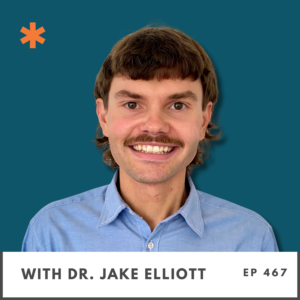 What happens when a water chemist leaves the lab and heads to the pump room? Dr. Jake Elliott knows firsthand. A former PhD researcher who studied resource recovery from trade‑waste customers, Jake now manages accounts at Hydro flow in Melbourne, working with cooling towers, boilers, chemical dosing rigs and wastewater treatment systems. He joins host Trace Blackmore to discuss how rigorous research, regulatory compliance and process automation translate into practical field work for industrial water treatment professionals.
From PhD Research to Industrial Practice
Jake’s academic background informs the way he approaches operations. While completing his PhD he investigated how to recover resources from wastewater permits, synthesizing municipal data with bench‑scale testing. Today he draws on that experience to design treatment systems and advise customers on cooling‑tower and boiler chemistry. He emphasizes long‑term efficiency: spending a little extra time or money now can save much more later. This mentality helps him balance the competing demands of design, installation, sales and service, and underscores Hydro flow’s support for continuing education.
Balancing Service, Sales and Efficiency
No two days look alike for Jake. One week he is calibrating pH probes, inspecting cooling towers and designing dosing skids; the next he is troubleshooting filtration systems or negotiating wastewater discharge limits. To stay ahead of his schedule, he deliberately “drags things as early as possible” and completes visits well before month‑end. Jake uses the iPhone Reminders app to tag tasks by site, service type and system; location triggers ensure he never forgets critical parts. He advocates automating routine reports and allowing generative AI to massage field notes into professional correspondence, provided every line is double‑checked for accuracy. Even at the end of a long day, tools such as ChatGPT help him strike the right tone in customer emails.
Regulation, Training and Risk Management
Jake contrasts cooling‑tower regulation in Australia with the more fragmented approach in the United States. In Victoria every tower must be registered, documented and sampled on a schedule; non‑compliance leads to fines. The risk management plan – the term used in Australia for what many Americans call a water management plan – is a comprehensive document containing details of the cooling tower, associated chillers and a unique registration number. Australian practitioners follow the AS/NZS 3666 standard, and third‑party RMP reviews and audits are annual requirements. Jake notes that an equivalent certification does not yet exist for international candidates seeking the Certified Water Technologist designation, although metric‑based exams may be under consideration.
Sales, Communication and Mentorship
Serving existing customers often means identifying the real decision drivers. Jake categorizes site priorities – cost reduction, profit increase, ease of use and product quality – and tailors proposals accordingly. He maintains open communication with influencers while gently probing approval limits, sometimes splitting quotes so that local managers can sign off without escalating requests. Mentorship is both a given and a goal: Hydro flow holds monthly meetings where technicians, account managers and production staff share problems and solutions, allowing juniors to benefit from seasoned expertise. Jake encourages newcomers to simply “do it” – the blend of hands‑on work, autonomy and flexibility makes industrial water treatment a rewarding career. In his lightning‑round advice he urges his younger self to be selective about commitments and to automate early.
Dr. Jake Elliott demonstrates that a rigorous scientific background and a passion for efficiency translate into better service, improved compliance and happier customers. His tips on process automation, risk management and sales communication help water professionals navigate a complex landscape while maintaining work–life balance. Listen to the full conversation above. Stay engaged, keep learning, and continue scaling up your knowledge!
Timestamps
01:14 - Trace Blackmore notes the conclusion of the 2026 AWT Technical Training (Session 1) and then shares his doctor’s office story
09:15 - Words of Water with James McDonald
11:45 - Upcoming Events for Water Treatment Professionals
15:32 - Introduction with Jake Elliott, PhD, Senior Account Manager at Hydro Flow
18:47 - Jake's Advice for those taking a Doctorate Degree
23:19 - How Jake came to work at Hydro Flow
44:24 - Tips from Jake
Quotes
“Very happy to spend a little bit of extra time or money now to save a lot of time or money later.”
“If you can get some of your thoughts down and then let ChatGPT massage that into something that is good communication, again, double check it before you send it.”
“I would tell myself to be selective in what you say yes to … automate hard, automate early.”
“Autonomy, flexibility. It’s really the perfect package, definitely for me and for people like me.”
Connect with Jake Elliott, PhD
Email: jakeelliott91@hotmail.com
Website: https://hydroflow.com.au/
LinkedIn: https://www.linkedin.com/company/hydro-flow/
Guest Resources Mentioned
AS / NZS 3666 Air-Handling and Water Systems of Buildings - Western Australia
Alien Clay by Adrian Tchaikovsky (Audible audiobook)
Dropbear (Paperback) by Evelyn Araluen (Author)
The Winner's Mindset Audible Logo Audible Audiobook – Unabridged Shane Watson (Author, Narrator)
Scaling UP! H2O Resources Mentioned
AWT (Association of Water Technologies)
Scaling UP! H2O Academy video courses
Words of Water with James McDonald
Today's definition is the curved upper surface of a liquid in a tube, such as a graduated cylinder. Can you guess the word?
2026 Events for Water Professionals
Check out our Scaling UP! H2O Events Calendar where we’ve listed every event Water Treaters should be aware of by clicking HERE.