462 From Lab Chemist to Field Mentor: Water, Culture, and Representation
Release Date: 02/06/2026
 485 Questions from the Nation Around the World with Trace Blackmore, CWT
Scaling UP! H2O
Ten questions from water professionals around the world become a practical decision-making session with Trace Blackmore, CWT. Drawing on earlier Scaling UP! H2O conversations, Trace explains how to evaluate treatment changes, use emerging tools responsibly, begin water reuse projects, strengthen teams, and continue growing professionally. Evaluate the Entire System A proposed treatment change should be evaluated by more than its purchase price. When comparing chlorine dioxide with traditional chlorine, Trace recommends examining biocide consumption, chemical storage,...
info_outline 484 Risk, Resilience, and Water Security with Dr. Newsha Ajami
Scaling UP! H2O
Industrial operations depend on water of a predictable quantity and quality, yet many organizations still treat that reliability as a given. joins Trace Blackmore, CWT, to examine water security as a business continuity issue and resilience as the ability to withstand pressure, maintain operations, and recover quickly when systems fail. Connecting Risk, Resilience, and Recovery For industrial water users, water security means maintaining access to the quantity and quality required to operate without interruption. That reliability depends on...
info_outline 483 From Process Engineer to Process Architect: Alicia Butler‑Pierre on Making Work Flow
Scaling UP! H2O
Industrial water professionals understand flow, pressure, heat exchange, wastewater, boilers, condensers, and process control. Alicia Butler-Pierre brings that same engineering logic into business systems, showing how work, information, decisions, and people move through an organization. Alicia, CEO of Equilibria, joins Trace Blackmore, CWT, to connect process engineering, operations management, Lean Six Sigma, dashboards, professional training, and business infrastructure. Her message is clear: whether you are moving water through a pipeline or work through a company, the question remains the...
info_outline 482 Preserving Our Industry’s Story – Paul Petersen and the Industrial Water Exhibit
Scaling UP! H2O
Industrial water treatment has always supported industry, but much of that story remains invisible to the public. Paul Petersen wants to change that by helping establish an industrial water treatment presence at the National Museum of Industrial History in Bethlehem, Pennsylvania. Paul Petersen, former president and CEO of Trident Technologies and current leader of the Industrial Water Task Group, joins Trace Blackmore to explain why preserving the industry’s history matters. His vision is not simply a static display of old equipment. Instead, the goal is to...
info_outline 481 From Waterfalls to SOPs: Building Better Utilities with Kalpna Solanki
Scaling UP! H2O
Water utility work depends on more than technical knowledge. It depends on clear procedures, current documents, practical training, and performance conversations that reflect what operators actually do in the field. In Episode 481, Trace Blackmore, CWT, welcomes back , President and CEO at , for a practical conversation on building stronger utilities through standard operating procedures, competencies, and performance evaluations. Kalpna shares how outdated SOPs, disconnected training tools, and top-down documentation can create risk, confusion, and missed...
info_outline 480 From Engineering Numbers to People, Power, and Policy with Sherine El‑Wattar
Scaling UP! H2O
Industrial water professionals work with chemistry, equipment, permits, and performance targets every day. Yet every gallon also moves through a framework of policy decisions: who can withdraw water, how it may be used, what quality must be returned, and whose needs are considered when systems are designed. , a science network officer supporting the Working Group II Technical Support Unit, brings an engineering foundation and a human-centered perspective to those questions. Her work focuses on climate impacts, adaptation, vulnerability, and risk while helping...
info_outline 479 Water Treatment: The Next Generation - Hustle Culture Meets Emotional Literacy with Tiffany Wentz‑Root
Scaling UP! H2O
In today’s episode of Scaling UP! H2O, host Trace Blackmore sits down with workplace resilience expert and U.S. Marine veteran to decode how different generations show up in the industrial water treatment industry. From the Silent Generation’s post‑war loyalties through Baby Boomers’ commitment to long hours, Gen X’s distrust of corporate loyalty, Millennials’ desire for purpose and feedback, and Gen Z’s demand for emotional literacy, the conversation illustrates how each cohort was shaped by historical and technological upheaval. The discussion reframes “hustle...
info_outline 478 Rethinking Power Plant Water and Steam Chemistry with Brad Buecker (Part 2)
Scaling UP! H2O
Power plant water and steam chemistry does not fail in isolation. A mistaken unit, an unused analyzer, an overdesigned pretreatment system, or a misunderstood condensate return problem can ripple across equipment, permits, production, and safety. In this Part 2 conversation with of and Buecker Associates, Trace Blackmore continues a practical discussion on the details that shape industrial water decisions. Brad shares field stories from combined cycle plants, package boilers, wastewater permitting, membrane systems, and decades of technical writing. When Small Errors Become Expensive...
info_outline 477 Rethinking Power Plant Water and Steam Chemistry with Brad Buecker (Part 1)
Scaling UP! H2O
Power plant water and steam chemistry is not a background task. It affects safety, reliability, metallurgy, production, and the decisions plant teams make under pressure. In Part 1 of this conversation, Trace Blackmore, CWT, welcomes Bradley Buecker of SAMCO Technologies and Buecker Associates to examine what happens when familiar assumptions go unchallenged. Safety Comes First in High-Energy Systems Bradley begins with the lesson that has shaped decades of his work: safety. Power and industrial systems involve heat, flow, moving equipment, chemicals, confined spaces, lockout/tagout...
info_outline 476 Positive Communication, Temperaments, and the WOW Effect with Paule Genest
Scaling UP! H2O
Communication shapes how teams learn, respond, correct, and build trust. Trace Blackmore, CWT welcomes returning guest Director, Sales and ESG (Environment, Social and Governance) Water and Energy TGWT / The Tannin Guys for a conversation on positive communication, temperaments, the WOW Effect, and how water professionals can use words with more clarity and care. Communication With a Positive Impact Paule reframes positive communication as communication with a positive impact. The goal is not fake positivity or polished language....
info_outline
Industrial water work rewards people who can move between precision and practicality. Katie Holliday brings both. She started as a lab chemist, then transitioned into field service with Apex Water and Process, where much of her work supports healthcare facilities and high-accountability programs.
Lab habits that protect your tools and your data
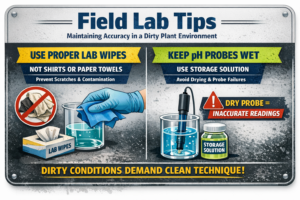 Katie describes the first surprise of field work: a central plant is “very dirty,” and the job demands good technique without chasing lab-level perfection. She shares a couple of simple practices that prevent expensive problems. Use proper lab wipes on glassware instead of shirts or paper towels, which can scratch surfaces and compromise readings. Keep pH probes wet with the correct storage solution, because once they dry out, they often stop working.
Healthcare water: SPD work and Legionella prevention
About 90% of Katie’s accounts are healthcare. She defines SPD as the sterile processing department and explains why expectations shift compared to boilers and cooling towers. SPD work is cleaner, more controlled, and typically includes additional components such as endotoxin filtration and UV. It also involves more testing and stricter standards that tie directly to patient safety. Alongside SPD, she emphasizes Legionella prevention as a constant priority, from cooling towers (including secondary disinfection) to domestic water, because facilities want to reduce risk to patients.
Water chemistry reality check: Phoenix versus “everywhere else”
Katie explains how Arizona water changes the operating window. She notes high hardness and high chlorides, which can limit cycles of concentration and force conservative targets compared with places like Atlanta, where Trace describes running much higher cycles. The takeaway for experienced pros is familiar: operating limits are local, and “what good looks like” depends on the incoming water and the constraints that matter most at that site.
Mentorship, representation, and field readiness systems

Katie shares what it meant to be the first woman account manager hire in a long-running operation, and her advice is practical: recruit intentionally, then train people in the field, not from the sidelines. She credits her mentor, Bernie Peacock, for accelerating her learning curve, and she now passes that on by responding fast, following through, and providing steady backup to newer teammates. She also describes how she built mechanical confidence, using manuals, YouTube, phone video, and a OneNote playbook that captures account contacts, access details, sampling points, and “where things are” notes for clean coverage when someone else is on-site.
Listen to the full conversation above. Explore related episodes below. Stay engaged, keep learning, and continue scaling up your knowledge!
Timestamps
02:14 - Trace Blackmore shares “first day” intimidation and learning curve in water treatment
08:55 - Words of Water with James McDonald
12:30 - Upcoming Events for Water Treatment Professionals
14:48 - Interview begins: Katie Holliday introduced (Apex Water and Process)
15:55 – Lab to Field transition and technique
20:27 – Representation and Mentorship
26:42 – Culture and Water Stewardship
33:31 – Healthcare work, SPD, and Legionella
35:56 – Mentoring and “give it back”
39:22 – Mechanical Confidence, Tools, and Documentation Systems
Quotes and Key Takeaways
“What do I not know that I don’t know?”
“Everyone needs a Bernie Peacock”
“Field accuracy doesn’t require lab perfection, but it does require clean technique.”
“The most effective mentoring is responsive and practical.”
“Documentation scales your value”
Connect with Katie Holliday 
Email: k.nativeamericanbeadwork@gmail.com
Website https://teamapex.com/
LinkedIn: https://www.linkedin.com/in/katie-holliday-9b6977246/
https://www.linkedin.com/company/apex-water-process/
Guest Resources Mentioned
The Perfect Marriage by Jeneva Rose
Under the Bridge by Rebecca Godfrey
AAMI ST108 Compliance in Sterile Processing
ASSE 12080 Legionella Water Safety certification
Scaling UP! H2O Resources Mentioned
AWT (Association of Water Technologies)
Scaling UP! H2O Academy video courses
Fearless Pricing: Ignite Your Team, Own Your Value, and Command What You Deserve by Casey Brown
Words of Water with James McDonald
Today's definition is the upward flow of water through a resin bed to clean, expand, and reclassify the bed. Can you guess the word?
2026 Events for Water Professionals
Check out our Scaling UP! H2O Events Calendar where we’ve listed every event Water Treaters should be aware of by clicking HERE.